The short answer
In an old house with radiators and no ducts, your main options are window or through-wall units, portable units, ductless mini-splits and small-duct high-velocity systems. Window units are the cheapest start. Ductless mini-splits cool and dehumidify best room by room, and as heat pumps they can also heat. Small-duct systems hide the equipment.
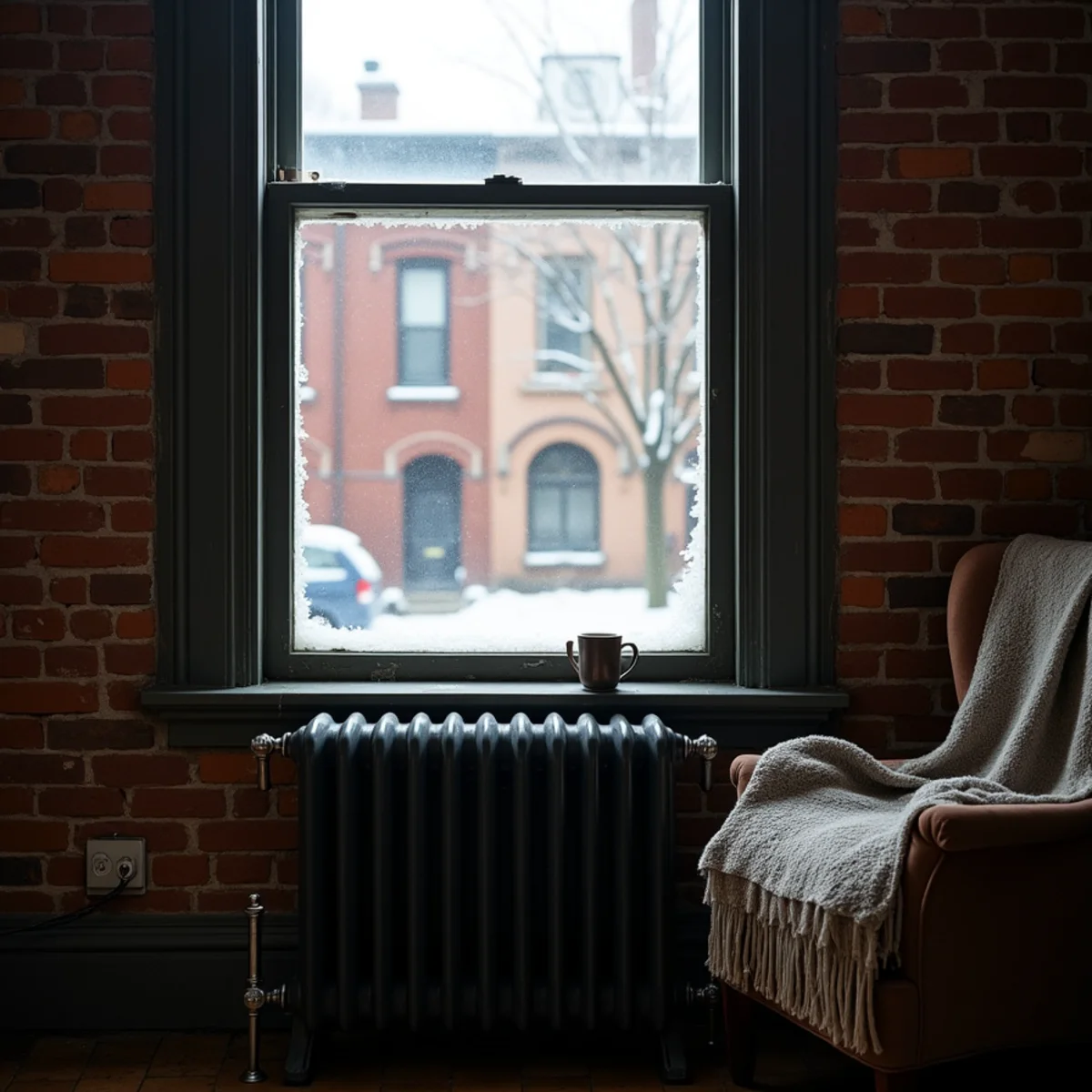
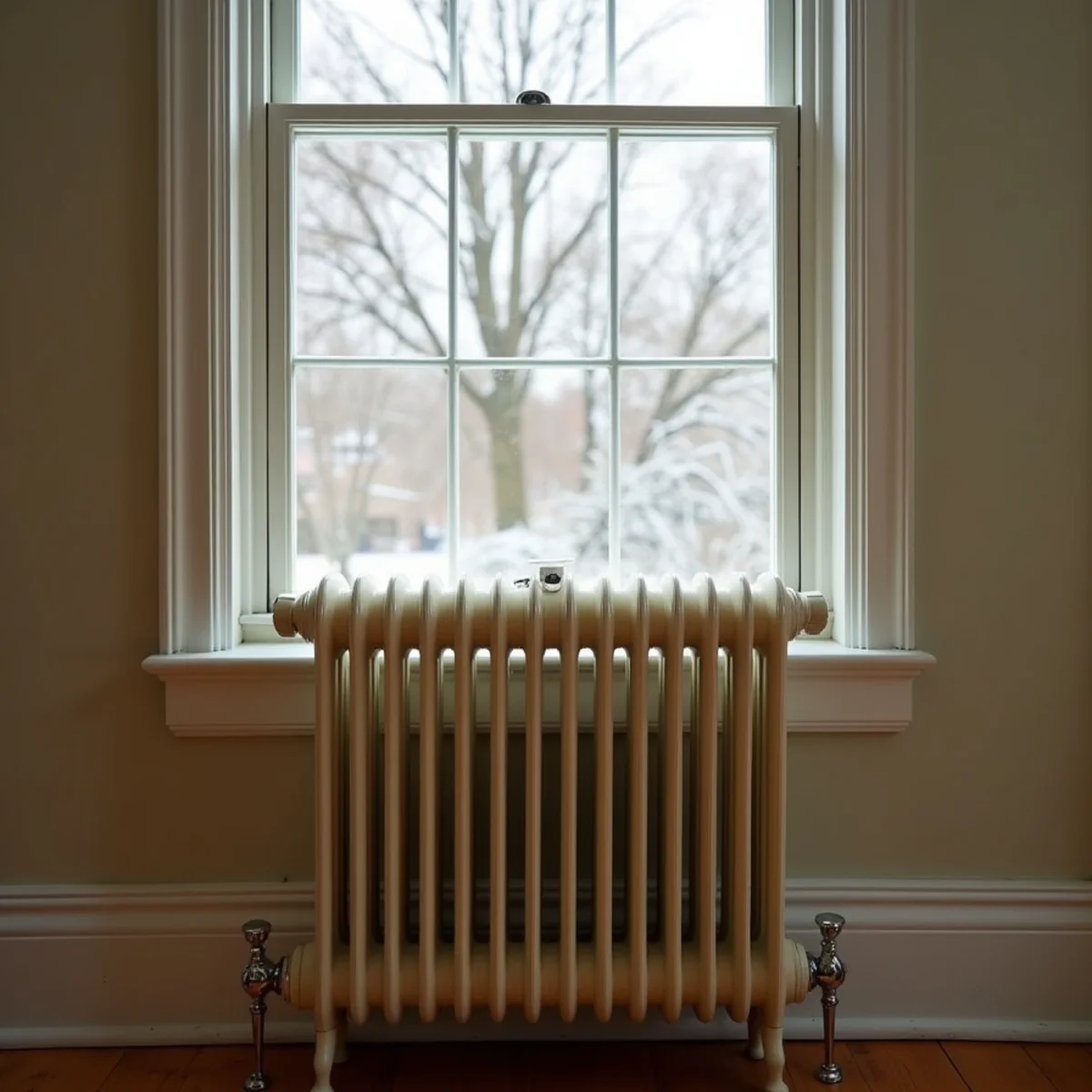
In the City of Newburgh, the median house was built in 1938, and most of those houses heat with steam or hot water radiators. No ductwork means no easy central air. July here averages highs around 84°F with real Hudson Valley humidity, so the question comes up every June.
Why so many houses here have no ductwork
The rowhouses of Newburgh's East End and the Victorians of Beacon were built for coal-fired steam or gravity hot water. Heat came up through pipes to cast-iron radiators, so nobody built duct chases. Plaster walls, brick party walls and balloon framing make adding full-size ducts later hard and disruptive.
Contrast that with Town of Newburgh subdivisions such as Meadow Hill or Colden Park, where forced-air furnaces came with ducts and adding central AC was straightforward. In a radiator house, cooling has to be planned around the building.
Option 1: window and through-wall units
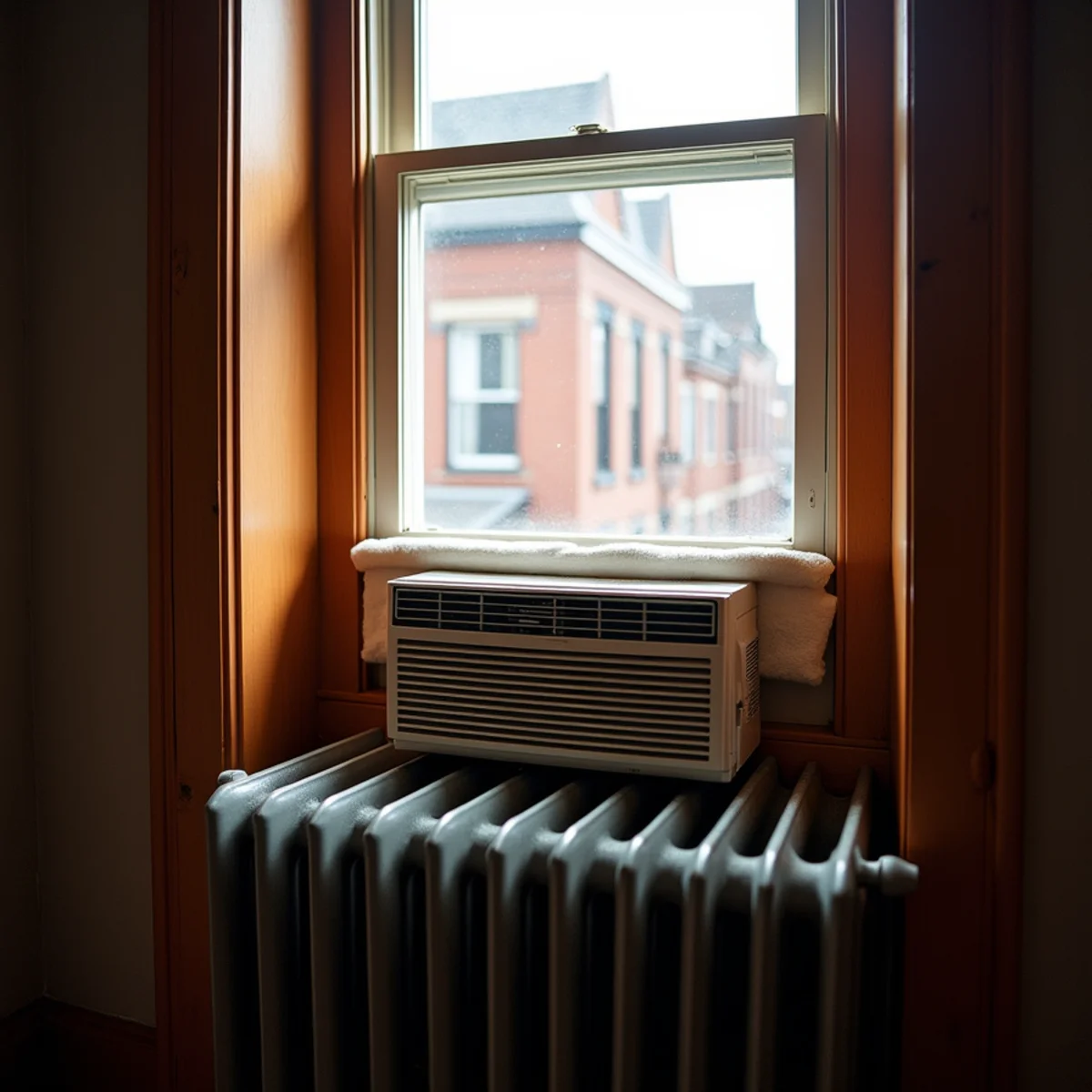
Window units are how most of Newburgh's older housing stock gets through July. They are inexpensive, need no permit in most cases and go in on a Saturday.
The downsides are real:
- Tall double-hung windows in older houses can be awkward to fit and secure, and heavy units are a two-person job up a narrow stair.
- They block light and the view, and a window with an AC unit is not a window you can open.
- Noise. The compressor sits in the room with you.
- Security and drafts if the unit stays in over the winter.
- Historic facades. In historic districts, units in street-facing windows are a common sight, but a permanent through-wall sleeve is an exterior change worth checking with the city first.
For renters, and for landlords with several units, window ACs are often the practical answer. A through-wall sleeve is tidier but means cutting brick or framing.
Option 2: portable air conditioners
Portable units roll on the floor and vent hot air through a hose in a window. They are useful where a window unit will not fit, such as casement windows or a rental where the lease forbids window units.
They are the least efficient choice. Single-hose models pull air out of the room and replace it with hot, humid outside air through every gap in an old house. Dual-hose models do better. Either way, expect a portable to struggle in a top-floor room on a humid July afternoon.
Option 3: ductless mini-splits
A ductless mini-split puts a slim head high on the wall in each room or zone, connected to an outdoor unit by a small refrigerant line set that passes through a hole about three inches across. No ducts and no open walls.
Why they work well in old houses:
- Room-by-room control. Each head has its own setting, so a hot top floor can get more cooling.
- Dehumidification. A properly sized system pulls real moisture out of humid July air, often a bigger comfort gain than the temperature drop.
- Quiet. The compressor is outside.
- Heat, too. Mini-splits are heat pumps. A cold-climate model can carry the shoulder seasons and help in winter, with the boiler kept as backup.
- Incentives. Qualifying heat pump installs may be eligible for NYS Clean Heat incentives through Central Hudson. See our guide to Central Hudson heat pump rebates.
The trade-offs are cost per room and the look of a wall head, which some owners of period houses dislike. Our ductless mini-split page covers the install in detail.
Option 4: small-duct high-velocity and attic air handlers
Small-duct high-velocity systems run flexible tubes about two inches across through closets, attics and wall cavities to small round outlets in ceilings or floors. They suit owners who want central air without wall heads, and the tubes fit where full-size ducts never could.
They take more labor to install than ductless systems, and the outlets make a soft rushing sound. A third route, common in Victorians with a usable attic, is a conventional air handler in the attic feeding the top floor through short ducts, with ductless heads or window units below. Both are planned as part of an HVAC installation.
The options side by side
Here is how the realistic choices compare in an old Newburgh or Beacon house, without prices, since those depend on the house:
- Window and through-wall units. Disruption: almost none. Noise: the loudest. Heating: none. Best fit: renters, a single bedroom, or a stopgap while you plan.
- Portable units. Disruption: none. Noise: loud, and the unit sits in the room. Heating: none. Best fit: a room where no window unit fits.
- Ductless mini-splits. Disruption: one small hole per head and an outdoor unit. Noise: quiet indoors. Heating: yes, as a heat pump. Best fit: most radiator houses, room by room or floor by floor.
- Slim-duct (ducted mini-split) units. Disruption: an air handler hidden in the attic or a closet with short ducts to nearby rooms. Noise: quiet. Heating: yes. Best fit: a top floor with an accessible attic, where you would rather not see wall heads.
- High-velocity small-duct systems. Disruption: flexible tubes snaked through walls and floors, round outlets about two inches across. Noise: a soft rush of air at the outlets. Heating: only if paired with a heat pump or coil from the boiler. Best fit: whole-house central air in a house with plaster you want to keep intact.
Ceiling fans help any of these feel cooler at a higher thermostat setting, and cost little to run.
Questions to ask before you choose
- Electrical. Does the panel have room for new circuits, or is a service upgrade needed first? Many 1920s and 1930s houses still have small panels.
- Attic and knee walls. Is there an attic or knee-wall space for an air handler or line sets, and how hot does it get in July?
- Walls. Plaster and lath and balloon framing can help or hinder: open stud bays sometimes give an easy chase from basement to attic.
- The front of the house. In historic districts, plan line-set covers and outdoor unit spots on side or rear walls, and check review rules first.
- Heat as well as cool? If you want the system to carry part of the winter heat, size it for heating, not just July.
Quotes, startup and upkeep for a ductless system
Compare written quotes line by line. Each should list:
- Head locations, the outdoor unit spot and model numbers
- The room-by-room load results behind each head size
- Line set routes, drains and any condensate pumps
- Electrical work and the permit, including who books the inspection
- Labor and manufacturer warranty terms
Startup and handoff
Line set and refrigerant work requires a technician with EPA Section 608 certification; ask which one on your job holds it. At startup, the technician should verify the refrigerant charge to the manufacturer's specifications, pour water into each drain pan to prove the drain, and show you the controls. Ask for the model and serial numbers and proof the warranty was registered.
Upkeep
Rinse the washable filters in each head every few weeks in cooling season, and keep the condensate outlet outside clear. If the system also heats, keep snow and ice off the outdoor unit all winter. A yearly professional cleaning of coils and drains keeps it quiet and dry.
From the field: planning cooling in a rowhouse or Victorian
A few things decide how a cooling project in an old house turns out.
Size by room. The top floor of a brick rowhouse under a flat roof can need several times the cooling of the parlor floor. A load calculation room by room beats one big unit.
That calculation is an ACCA Manual J load for each room, and Manual S then matches each head and the outdoor unit to those loads. An oversized head in a small bedroom short-cycles and leaves the air clammy.
Plan the line set route. In attached rowhouses, the outdoor unit usually goes in the rear yard or on a flat roof, and line sets run up the back wall or through closets. In historic districts, keep equipment off street-facing walls and check with the city's architectural review process first.
Check the electrical service. Older houses can have small panels. A mini-split may need a new circuit or a panel upgrade.
Mind the drain. Each indoor head makes condensate. The drain has to slope outside or to a small pump, or it will stain plaster.
Two-family houses. Give each apartment its own system on its own meter.
A typical call: a Beacon homeowner with three window units wants the top floor comfortable. A three-zone ductless system goes in with the outdoor unit in the back yard, and the window units come out.
Plan cooling for your old house
If you are tired of window units, or an existing system is not keeping up, call Newburgh Bay Air Pros at (321) 478-0693. We answer 24/7 and send the nearest available technician, from the Newburgh East End to older homes in Beacon. If you already have a mini-split or central system that is not cooling, we handle AC repair too. You approve a written price before work starts. Every HVAC technician we send is licensed where New York requires it, and insured.
Common Questions
Can I add central air to a house with radiators?
Yes, but not with standard ducts in most cases. The usual routes are ductless mini-splits, a small-duct high-velocity system run through closets and attics, or an attic air handler for the top floor. Your radiators and boiler stay in place for heat. The right choice depends on the layout, the attic and how visible you want the equipment to be.
Will a ductless mini-split heat my house in winter too?
A mini-split is a heat pump, so it heats as well as cools. Cold-climate models keep heating well below the 18°F January lows we see here. Many Newburgh owners use them for fall and spring heat and keep the boiler as backup for the coldest nights. Check the published low-temperature capacity of the model being quoted.
Do I need permission to install an outdoor unit in a Newburgh historic district?
Exterior changes in Newburgh's historic districts go through the city's architectural review process. Placing the outdoor unit in a rear yard and keeping line sets off street-facing walls usually makes things simpler. Check with the city before installing, and expect the installing contractor to pull the building permit that the work generally needs.
How many mini-split heads does a rowhouse need?
It depends on the layout and the load, not the number of rooms. A typical rowhouse might need a head on each occupied floor, with more on a hot top floor under a flat roof. Open doorways between rooms can let one head serve two spaces. A room-by-room load calculation sets the number, so ask for one before you accept a quote.
Will a NYS Clean Heat incentive cover a ductless system?
It may. Qualifying cold-climate ductless heat pumps have been eligible through Central Hudson, but nothing is guaranteed until the program confirms it in writing. Amounts and rules change, a system that heats part of the house can fall into a different category, and only a participating contractor can apply, so ask whether your specific installer is enrolled. Our Central Hudson heat pump rebate guide explains the steps.