Steam or hot water: how to tell which boiler system your home has
About 61% of the city's homes were built before 1940, and most of them still heat with a boiler.
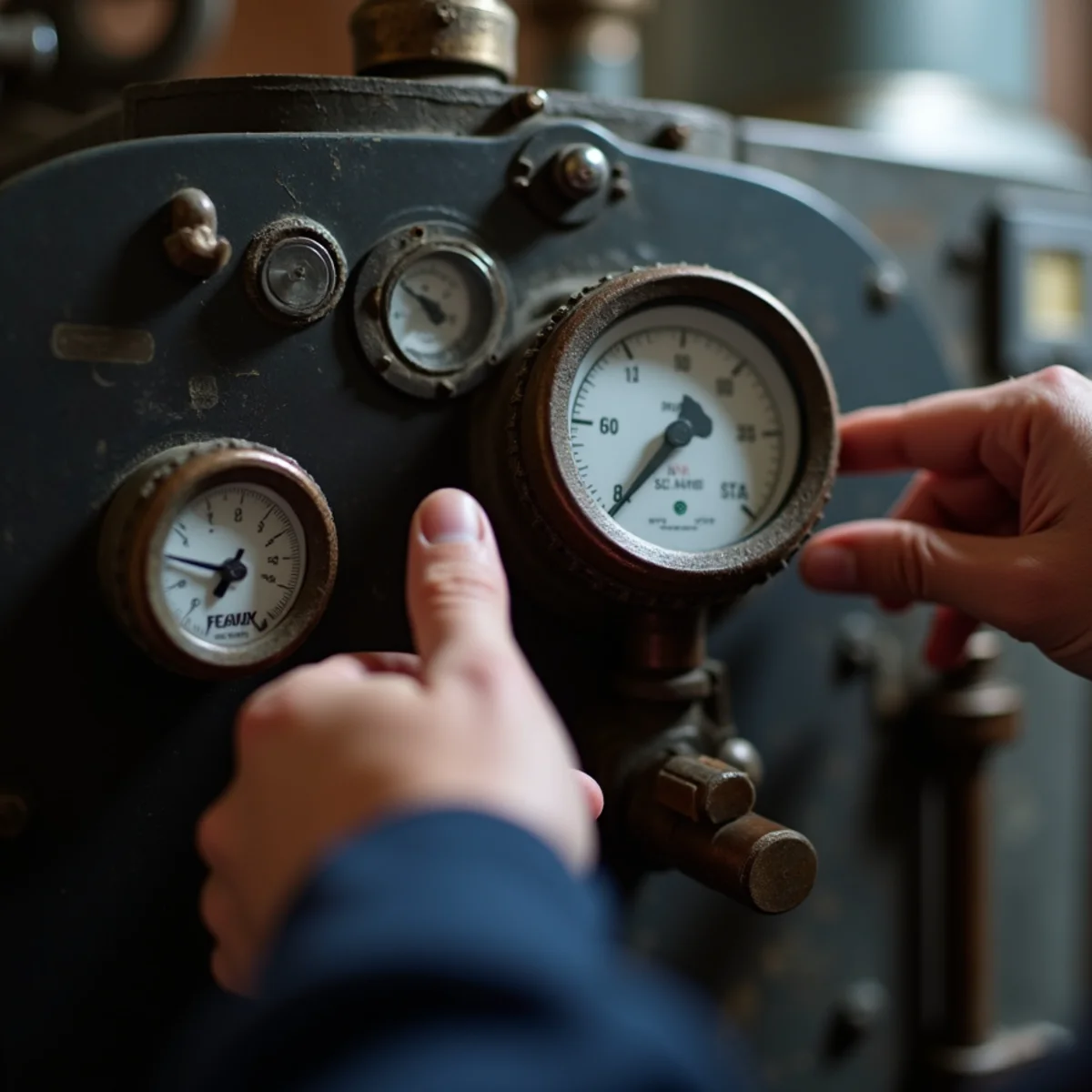
- Steam. A glass sight tube on the side of the boiler shows a water line. The pressure gauge reads very low numbers, since residential steam usually runs under 2 psi. Radiators have a small air vent on one end (one-pipe steam) or two pipes and a trap (two-pipe steam).
- Hot water. No sight glass. A combined pressure and temperature gauge typically reads around 12 to 15 psi with the system cold. You will find a circulator pump near the boiler, an expansion tank overhead, and baseboard or radiators with a small bleed valve at the top.
Many East End rowhouses still run their original steam. Two- to four-family houses around Liberty and Grand Streets were often converted to hot water with a zone for each apartment. Not sure? The technician confirms on site.
One cold radiator, or the whole house?
The split tells you where to look.
- Steam, one radiator cold: a stuck air vent, a closed or half-open supply valve, or a radiator pitched so condensate cannot drain back.
- Steam, the whole house cold or slow: a low water line in the sight glass, a tripped low-water cut-off, a pressuretrol set too high, failed main vents in the basement, or a burner that will not fire.
- Hot water, one radiator or baseboard cold: air trapped at the top (cold at the top, warm at the bottom), a stuck zone valve, or a closed valve on that loop.
- Hot water, a whole zone or house cold: a failed circulator, low system pressure, a waterlogged expansion tank or an aquastat that is not calling for heat.
- Cold at the bottom, warm at the top: sludge settled in an old radiator or loop, which a flush or radiator work can address.
What boiler repair includes: burner, controls, steam side and water side
A boiler call covers more than the box in the basement. Depending on the system, the technician works on:
- The burner. Gas ignition and flame sensing, or the oil burner's nozzle, filter, pump, electrodes and CAD cell, with a combustion check after any burner work.
- Safety and operating controls. The low-water cut-off, pressuretrol, aquastat, high limit, relief valve and the thermostat wiring that calls for heat.
- The steam side. Sight glass and water line, main vents, radiator air vents, two-pipe traps, pipe pitch behind water hammer, and the automatic water feeder if there is one.
- The water side. Circulators, zone valves, the expansion tank, fill valve and pressure, air separation and purging, and leaks at fittings or baseboard.
- Radiators and baseboard. Stuck valves, leaking spuds, radiators that need re-pitching or shimming, and balancing so the far rooms heat with the near ones.
- Written findings. What failed, what is urgent, what can wait, and the price for each before work starts.
Tankless coils that make hot water for the taps, and indirect water heaters fed by the boiler, are part of the same visit when they share the boiler's controls.
Steam boiler problems: banging pipes, cold radiators, low-water cut-offs, pressure settings
Most steam trouble comes from water sitting where it should not, or controls set wrong.
Banging pipes
Water hammer happens when steam slams into condensate trapped in a sagging pipe. Old houses settle, pipes lose their pitch, and an overfilled boiler makes it worse. Re-pitching a run or shimming a radiator often cures it.
Cold radiators
A failed main vent in the basement slows steam to the whole house. A stuck radiator vent leaves one room cold.
Low-water cut-off
This safety control shuts the burner off when the water drops too low. A dirty probe or float can trip it falsely. A real low-water condition means a leak or a failed automatic feed, and it should never be bypassed.
Pressure settings
Many pressuretrols get turned up "for more heat." Higher pressure actually slows steam, spits water from vents and burns more fuel. The technician resets it to the low range the system was built for.
Hot water boiler problems: circulators, zone valves, air in the lines, expansion tanks
Hydronic failures sit in the parts that move water and hold pressure.
- Circulator pump. It hums with no flow, or seizes after sitting all summer. A hot boiler with cold radiators often points here.
- Zone valves. The motor head burns out and the valve stays shut, leaving one apartment or one floor cold. These are common in two- and three-family houses split into zones.
- Air in the lines. Gurgling pipes and radiators that are warm at the bottom and cold at the top. Bleeding helps, but a system that keeps collecting air has a failed air separator or low fill pressure.
- Expansion tank. A waterlogged tank lets pressure spike as the water heats, and the 30 psi relief valve starts to drip.
- Fill valve. When it fails, pressure sags and the top floor of a three-story Victorian goes cold first.
- Pressure-relief valve. An old one can weep at normal pressure; one that keeps opening is reporting a real pressure problem. It gets replaced, never capped or plugged.
- Radiant floor zones. Air in the tubing loop leaves a zone slow or cold, and the boiler often takes the blame. Purging the loop and checking that zone's circulator and controls usually finds it.
Baseboard systems in Town of Newburgh ranches fail the same ways.
Oil-fired boiler service: burner, nozzle, filter and lockout resets
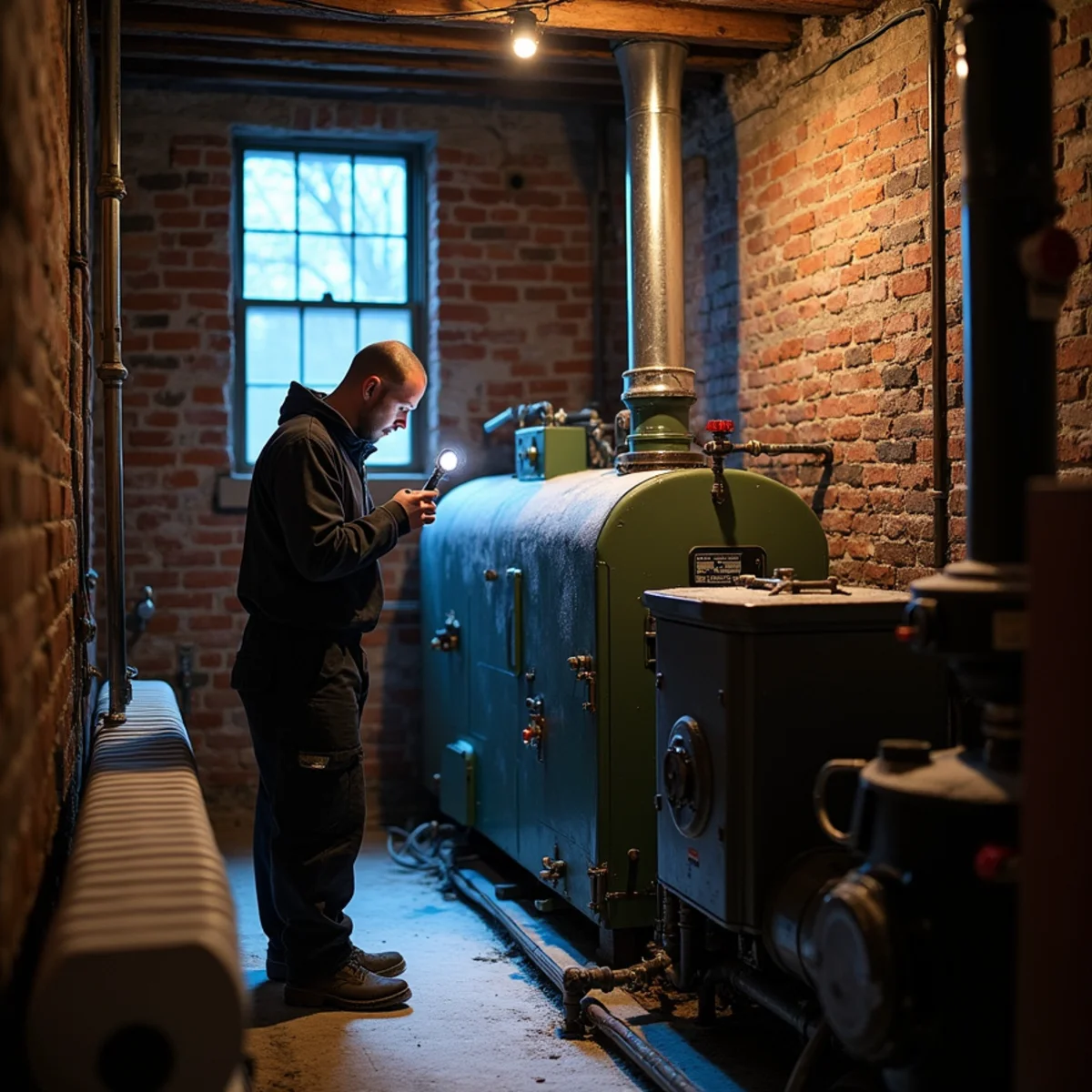
Much of Newburgh's boiler heat burns oil, and in homes off the gas mains around Cornwall and rural New Windsor, nearly all of it does. An oil boiler's burner has the same parts as an oil furnace burner: nozzle, oil filter, fuel pump, electrodes, CAD cell and primary control.
Yearly service matters more with oil. The technician changes the nozzle and filter, brushes soot from the combustion chamber and flue passages, and tests combustion.
A lockout means the primary control saw no flame. The usual causes are a clogged nozzle, a dirty CAD cell, a filter plugged with tank sludge, or an empty tank.
Safety warning: Press the burner's reset button once at most. If it does not stay lit, stop and call. Repeated resets can flood the combustion chamber with oil.
If your home has ducts and a furnace instead, see gas and oil furnace repair.
Radiators in Newburgh rowhouses and Victorians: vents, valves and uneven heat
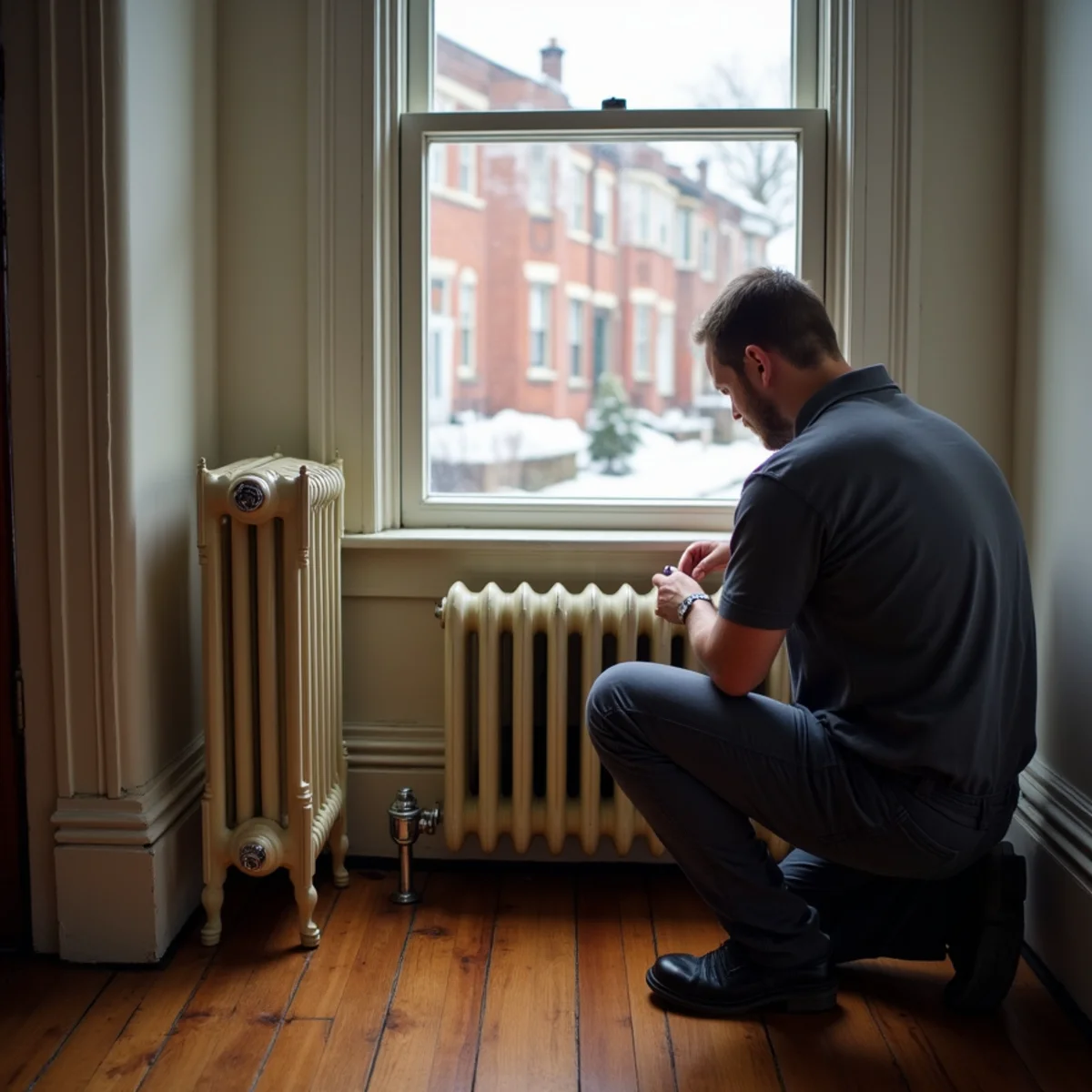
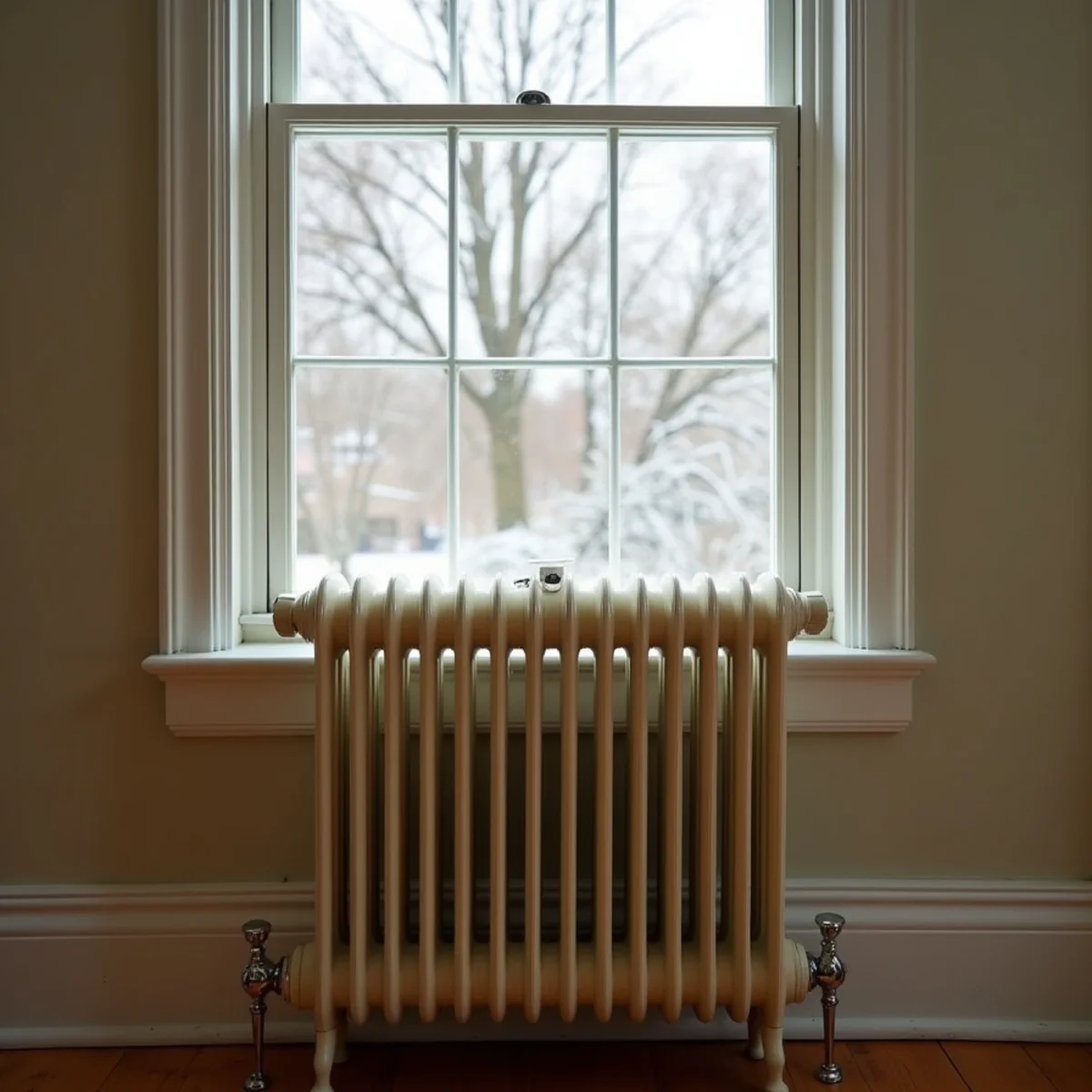
The East End and the Montgomery-Grand-Liberty Streets district are full of cast-iron radiators under tall windows. Uneven heat in these houses usually starts at the radiators, not the boiler.
- One-pipe steam vents. Each vent lets air out so steam can enter. Stuck shut, the radiator stays cold. Stuck open, it hisses and spits water. Vents come in different sizes, and matching them balances front rooms against back rooms.
- Supply valves. On one-pipe steam, the valve must be fully open or fully closed. Half open, it traps water and bangs.
- Two-pipe steam traps. A failed trap lets steam into the return line, causing noise and uneven heat.
- Hot water bleed valves. A cold top means trapped air.
- Heavy covers and layers of paint cut a radiator's output.
Our guide to steam radiator banging, hissing and cold radiators explains each sign in more depth. The same brick housing across the river in Beacon and elsewhere in our service areas gets the same care.
A leaking boiler or dropping pressure: what is urgent and what can wait
Call right away, day or night, for:
- Water pouring or spraying from the boiler or a pipe
- A relief valve discharging steadily
- A steam boiler with no water showing in the sight glass
- A burner that keeps firing while pressure or temperature climbs
- Any gas or exhaust smell, or a carbon monoxide alarm
A slow drip at a radiator valve, a weeping fitting, or a hot water system that needs a top-up every few weeks can usually wait for a daytime visit, as long as the heat works.
While you wait for a technician:
- If water is spreading, turn the boiler off at its emergency switch.
- Move stored belongings away and keep the floor drain clear.
- Call (321) 478-0693 and describe the leak and what the gauges read.
Safety warning: Never add water to a hot steam boiler that has run dry. Cold water on hot cast iron can crack a section. Leave it off and let it cool.
For night and weekend calls, our 24/7 emergency HVAC repair page explains how dispatch works.
Write down the gauge before you call
Note the pressure gauge reading and, on steam, the water level in the sight glass. Photograph the rating label and any code on the burner control, and note which floors or zones are cold. Do not keep resetting the burner; a safety control that keeps tripping is doing its job.
Pipes at risk of freezing
A dead boiler in a cold snap puts piping at risk before the house feels dangerous. Baseboard on outside walls, pipes in a cold basement or crawl space, and a vacant apartment's zone freeze first, and a frozen loop can split copper or crack a radiator. Tell us which runs sit in unheated space. Never thaw a pipe with a torch or open flame.
How a boiler repair visit works, step by step
Every visit follows the same order, so nothing gets reset or replaced on a guess.
- The call. Tell us steam or hot water if you know it, the fuel, the gauge or sight-glass reading and which rooms are cold. A landlord should say who can let the technician in.
- Safety first. The technician checks for gas or oil odor, water on the floor and the flue before firing anything.
- Read the system. Water line or pressure, controls, burner, circulators or vents, and which zones or radiators are not heating.
- Find the cause. The firing sequence is tested and the failed part is identified, without repeatedly resetting a safety control.
- Written price. You get the repair and its price in writing, plus any replacement option if the boiler is near the end of its life. A diagnosis is not a repair authorization.
- Repair and test. After the fix, the boiler runs a full cycle: steam to the far radiators or hot water through every zone, with combustion checked on burner work.
- Wrap-up. You hear what was done, what to watch, and when the boiler should next be serviced.
Repair or replace an older boiler: cast iron sections, efficiency, chimney liner
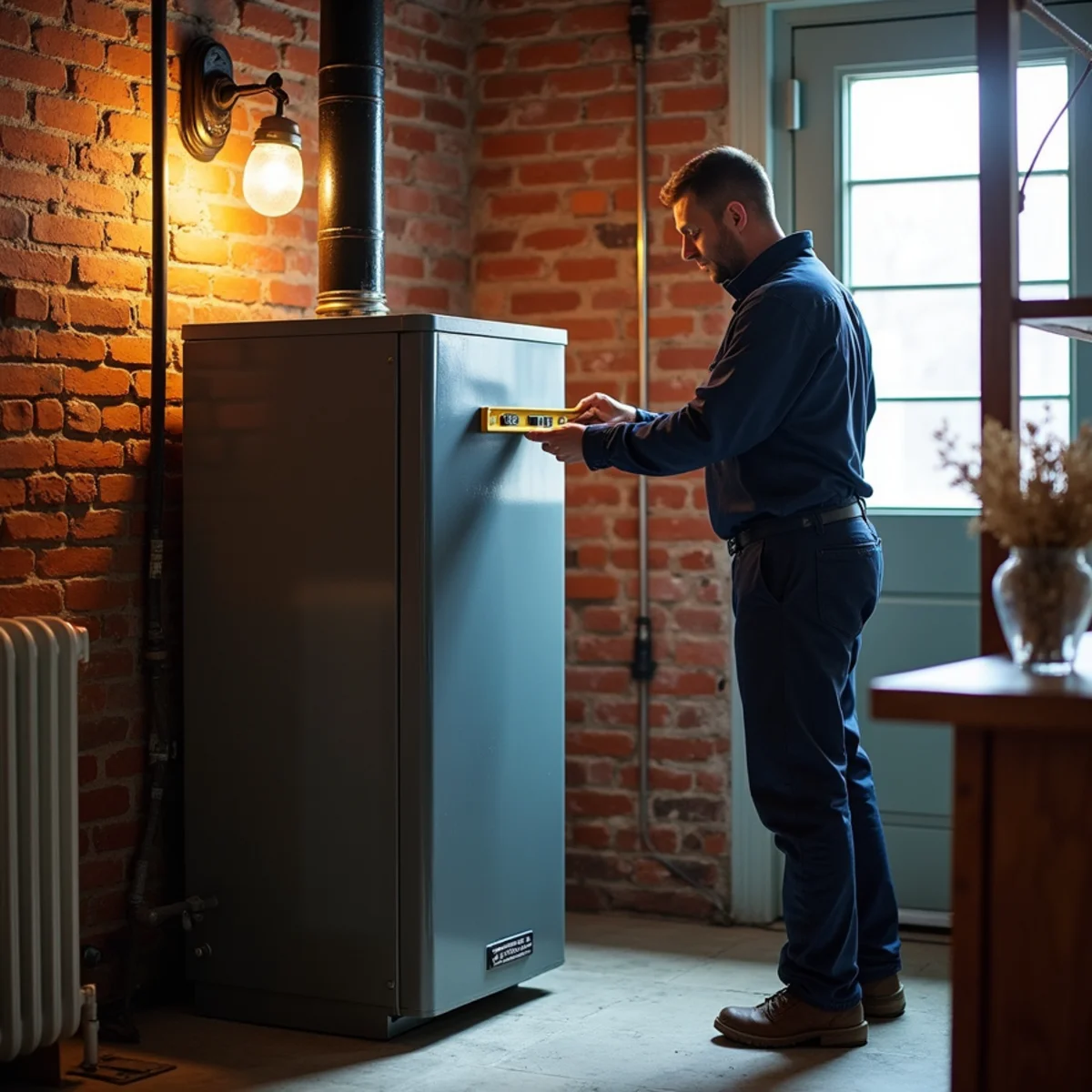
A cast-iron boiler typically lasts 20 to 30 years or more, and plenty of Newburgh basements hold boilers older than that. Replacement starts to make sense when:
- A section cracks. Water under the boiler, or a steam boiler that loses water fast, are common signs. Replacing a section on an old unit rarely pays.
- Fuel use is high. Boilers converted from coal decades ago, and oversized ones, burn far more fuel than modern units.
- Repairs stack up on a boiler that is already decades old.
Chimney liners
When an old oil or gas boiler venting into a masonry chimney is replaced, a liner is often needed. A modern boiler runs cooler, and its exhaust can condense acidic water inside an unlined chimney. Some high-efficiency gas boilers vent out a side wall instead.
Steam homes usually get a new steam boiler, since converting to hot water is not always practical. Our heating system replacement page and ductless mini-splits for radiator homes cover the bigger options.
What a boiler replacement quote should include
- A heat-loss calculation. A hot water boiler should be sized from an ACCA Manual J heat-loss calculation; a steam boiler is matched to the radiators it has to fill. Copying the old boiler's rating can repeat an oversizing that dates back to coal.
- Permit roles. Ask who pulls the permit, who schedules the inspection and who handles closeout.
- Startup testing. Combustion readings on the burner, plus water-side checks: pressure, relief valve, expansion tank and circulators on hot water; water line and low-water cut-off on steam.
- Records and warranty. Model and serial numbers, manuals, and who registers the manufacturer's warranty.
Compare written quotes line by line, including liner, piping, old boiler removal, permit and startup.
Every HVAC technician we send is licensed where New York requires it, and insured.
What affects boiler repair and replacement cost
After diagnosis, you get a written price before any work starts. What drives it:
- Steam or hot water. Steam work often means vents, pipe pitch and low-water controls. Hot water work means pumps, zone valves and expansion tanks.
- Fuel. Oil burners need nozzle and filter service; gas boilers carry different parts.
- The part itself. A radiator vent is minor. A circulator or low-water cut-off is moderate. A cracked section is major.
- Access. Tight rowhouse basements with low ceilings and narrow stairs slow every job.
- Replacement extras. A chimney liner, new near-boiler piping, removing the old boiler, and a permit, which a replacement generally needs from the City of Newburgh Building Department or your town.
- Time of the call. Nights, weekends and holidays can carry after-hours rates, and you hear that before dispatch.
The diagnostic visit finds the cause. It does not authorize a repair: nothing is fixed until you approve the written price.
For more, read what furnace and boiler repair costs in Newburgh.
Why call us for boiler repair in Newburgh
Boilers and radiators are the default heat in a city with a 1938 median build year. Here is what Newburgh Bay Air Pros brings to those calls.
Steam and hot water, both
Technicians who know one-pipe and two-pipe steam, hydronic zones and the oil and gas burners that fire them.
Answered 24/7
A person picks up at (321) 478-0693 day and night, and you get an arrival window on the call.
Written price first
You approve a written price after diagnosis and before any repair, liner or replacement work.
Licensed where required, and insured
Every HVAC technician we send is licensed where New York requires it, and insured.
Built for multi-family buildings
Landlords and property managers can call for tenants' units; the price goes to the owner for approval.
Boiler Repair and Replacement Across Newburgh and Nearby Towns
Calls come in from all over our HVAC service area around Newburgh. These are the towns we hear from most for boiler repair:
We also cover Fishkill, Walden and Washingtonville.
Boiler Repair and Replacement FAQs
Why are my radiators banging or hissing?
Banging in a steam system is usually water hammer: steam hitting water trapped in a pipe or radiator that has lost its pitch. A short hiss from a one-pipe air vent as the heat comes up is normal. A vent that keeps hissing or spits water is failing. Hot water radiators gurgle from trapped air. Our steam radiator problems guide covers each sound.
One radiator stays cold while the rest heat up. What is wrong?
On one-pipe steam, the radiator's air vent is usually stuck shut or its supply valve is partly closed. On two-pipe steam, the trap may have failed. On hot water, the radiator likely has trapped air or sits on a zone with a failed valve. If a whole floor is cold, suspect the main vents or fill pressure instead.
Do the technicians work on oil boilers and steam systems?
Yes. The technicians we send handle one-pipe and two-pipe steam, hot water baseboard and radiator systems, and oil, natural gas and propane burners. That covers nozzle and filter service, low-water cut-offs, pressuretrols, circulators, zone valves and expansion tanks. When you call (321) 478-0693, tell us the fuel and whether your radiators have air vents or bleed valves.
How long does a cast iron boiler last, and when is replacement worth it?
A cast-iron boiler typically lasts 20 to 30 years or more with yearly service. Replacement is worth it when a section cracks, when fuel use is high for an old or oversized boiler, or when repairs keep coming. The technician explains the repair price and the replacement option, including any chimney liner, so you can compare them side by side.
I'm a landlord and my tenants have no heat. Can you help?
Yes. Many no-heat calls in Newburgh come from two- to four-family buildings. Call (321) 478-0693 any hour, give the address, which units are cold and who can open the basement, and you get an arrival window on the call. The written price goes to you, the owner, for approval before work starts.
How do I bleed a radiator?
Only hot water radiators and baseboard are bled. With the system warm, hold a rag under the small bleed valve at the top, open it with a radiator key until water replaces the hiss of air, then close it. Check the boiler gauge afterward; if pressure drops below its normal cold reading, call. Steam radiators are never bled: their air vents work on their own and are replaced when they stick.
Is a leaking boiler dangerous?
Usually not at first, but it should not wait. A drip from the relief valve can mean pressure is too high or the expansion tank has failed, and a leak from the boiler itself can mean a cracked section. Do not cap or plug a relief valve. Keep water away from the burner and electrical parts, note the gauge reading, and call. Water on the floor with no heat in freezing weather is an emergency.
How much does boiler repair cost in Newburgh?
It depends on the system and the part. A radiator vent is minor; a circulator, zone valve or low-water cut-off is moderate; a cracked section usually means a replacement quote. Steam or hot water, fuel, access and after-hours timing also move the price. You approve a written price after diagnosis, before work starts. Our furnace and boiler repair cost guide explains each factor.
Can I replace my boiler with a heat pump?
Sometimes. Many radiator homes keep the boiler and add ductless heat pumps for cooling and milder-weather heat. Others retire the boiler once cold-climate heat pumps are sized for the coldest nights. NYS Clean Heat incentives through Central Hudson may help with the cost. Amounts and rules change and the install must go through a participating contractor, so check Central Hudson's heat pump incentive page first.
When should my boiler be serviced?
Once a year, in early fall, before the first sustained cold snap. Oil boilers need it most: a new nozzle and filter, soot cleaning and a combustion test. Hot water systems also get a check of fill pressure, the expansion tank and the relief valve. Steam systems get a low-water cut-off test and a look at the water line. Call (321) 478-0693 to book it.
Last reviewed by Newburgh Bay Air Pros. Checked before each heating and cooling season.