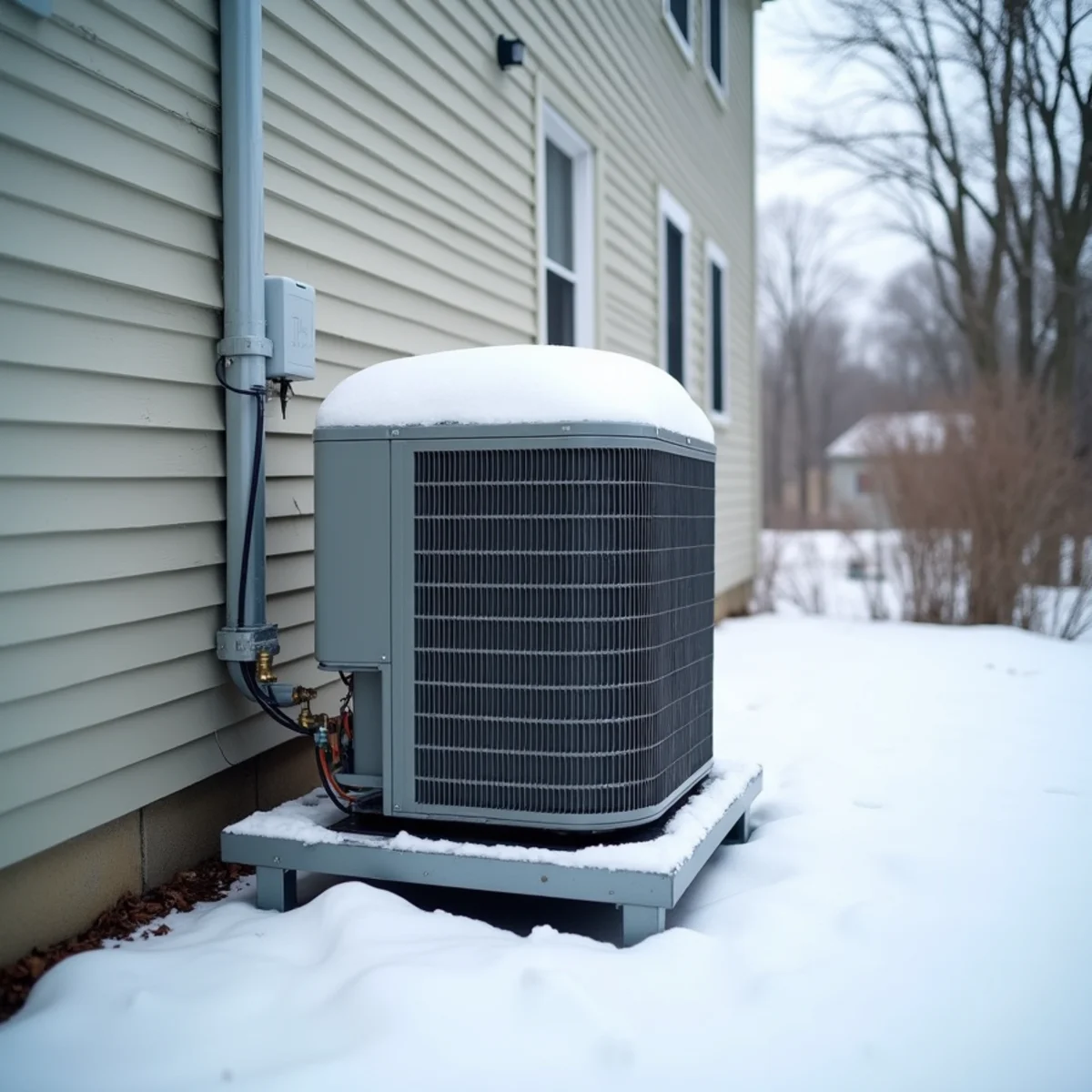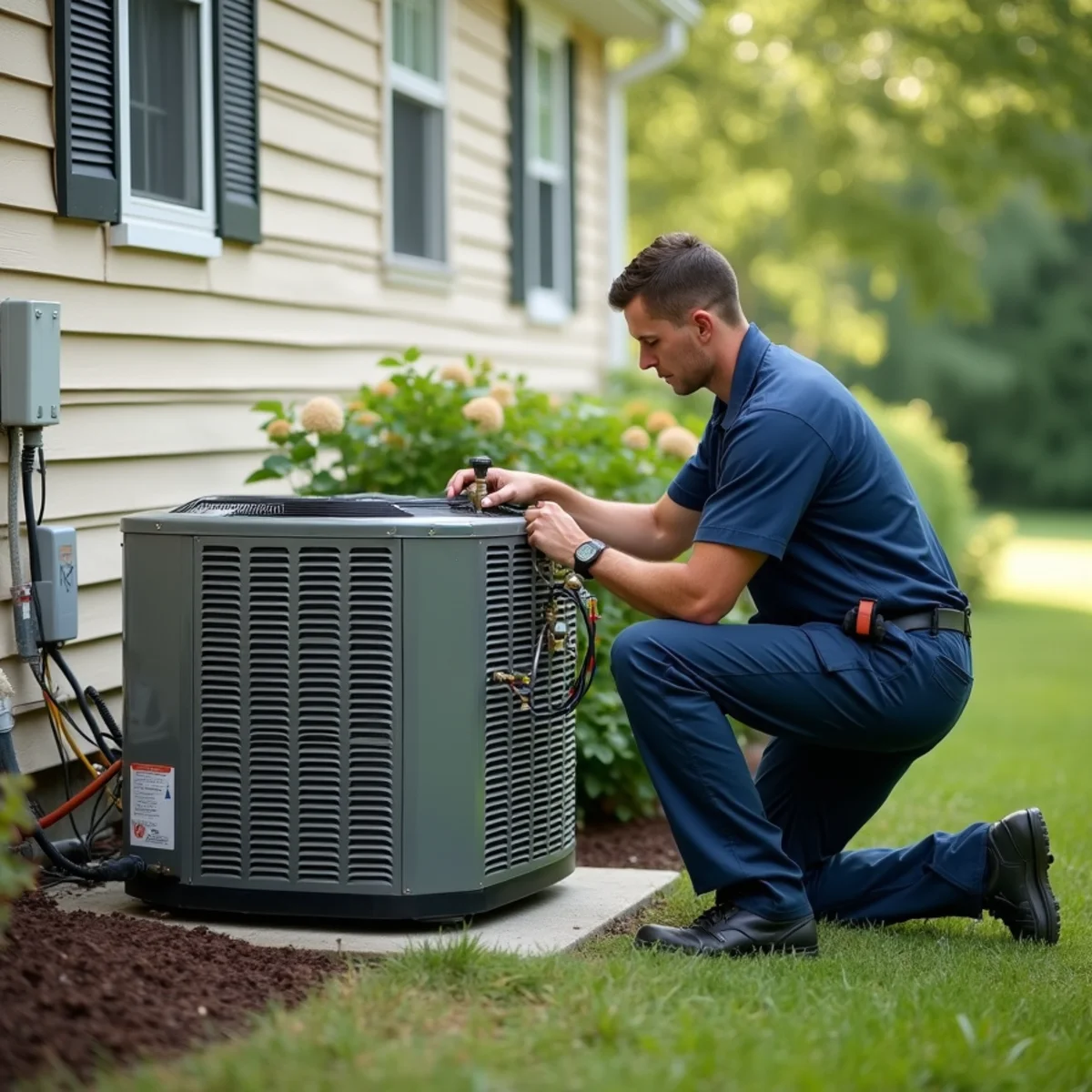
AC problems we repair in the City and Town of Newburgh
Cooling in Newburgh splits along the same line as heating. The Town's subdivisions (Meadow Hill, Gardnertown, Colden Park, Balmville, Orange Lake) mostly have central air: a condenser on a pad beside the siding and an indoor coil sitting on top of the furnace. Many went in during the 1990s and 2000s and are now at the age when parts fail. In the city, radiator-heated rowhouses have no ducts, so cooling means window units or ductless mini-splits. For those homes, read cooling an old house without ductwork.
Calls we take every summer:
- The AC runs but the house stays warm
- The outdoor unit sits silent while the indoor blower runs
- Ice on the copper line or the indoor coil
- Water on the basement floor, or a ceiling stain under an attic air handler
- Humming, buzzing or a breaker that trips
Technicians also repair ductless mini-splits and heat pumps, the usual cooling retrofit in the city's older homes.
What AC repair includes: electrical parts, refrigerant, airflow and drains
An AC repair call covers the whole cooling circuit, not just the box outside. Depending on what the system is doing, the technician works on:
- Outdoor unit electrical. Run capacitors, the contactor, the condenser fan motor, wiring and the disconnect, plus a compressor that hums but will not start.
- The refrigerant circuit. Pressures and temperatures, leak searches at coils, fittings and service valves, and recharging only after a leak is found and fixed. Work on R-22, R-410A or the newer R-454B systems is done by an EPA Section 608 certified technician.
- Airflow. Filter, blower motor and wheel, the indoor evaporator coil, and returns or ducts that starve the coil and let it freeze.
- Water. The drain pan, condensate line, float switch and condensate pump that shut the system off when they back up.
- Controls. Thermostat mode, wiring and the low-voltage circuit between the thermostat, the air handler and the outdoor unit.
- Ductless heads. Filters, coils, drain lines and error codes on mini-splits, which many Newburgh owners use for upstairs rooms.
You get written findings: what failed, what is urgent, what can wait, and the price before any work starts.
Short cycling and odd smells
An AC that starts and stops every few minutes points to an oversized unit, a frozen coil, a failing capacitor or a thermostat in direct sun. A musty smell from the vents usually means standing water in the pan or a dirty coil. A burning or electrical smell means turn the system off at the thermostat and call.
AC running but not cooling: airflow, refrigerant and compressor causes
An air conditioner does not make cold. It moves heat from inside to outside, and when that move breaks down, the system runs while the house stays warm.
Airflow
A clogged filter, a dirty indoor coil, closed registers or a weak blower motor starve the coil of air. Cooling drops and the coil can freeze. In most Town homes the furnace blower moves the AC air too, so a blower problem shows up in both seasons.
Refrigerant
Refrigerant is not used up. A low charge means a leak somewhere. Signs include ice on the larger copper line, a hissing sound and run times that never end. The technician reads pressures and temperatures to confirm it.
Compressor and outdoor coil
The outdoor coil sheds the heat. Cottonwood fluff, grass clippings and dryer lint pack it by July, and the compressor runs hot. A compressor that hums but will not start may have a failed capacitor, a small repair, or a failed compressor, a major one. Meter tests tell them apart.
Leaky or uninsulated ducts
Sometimes the cold air is lost on the way. Attic ducts with loose joints or thin insulation warm the air before it reaches the bedrooms, and leaky basement ducts cool the basement instead of the second floor. Warm upstairs rooms often point to duct leakage, not a too-small AC.
Frozen coils, water leaks and clogged condensate drains
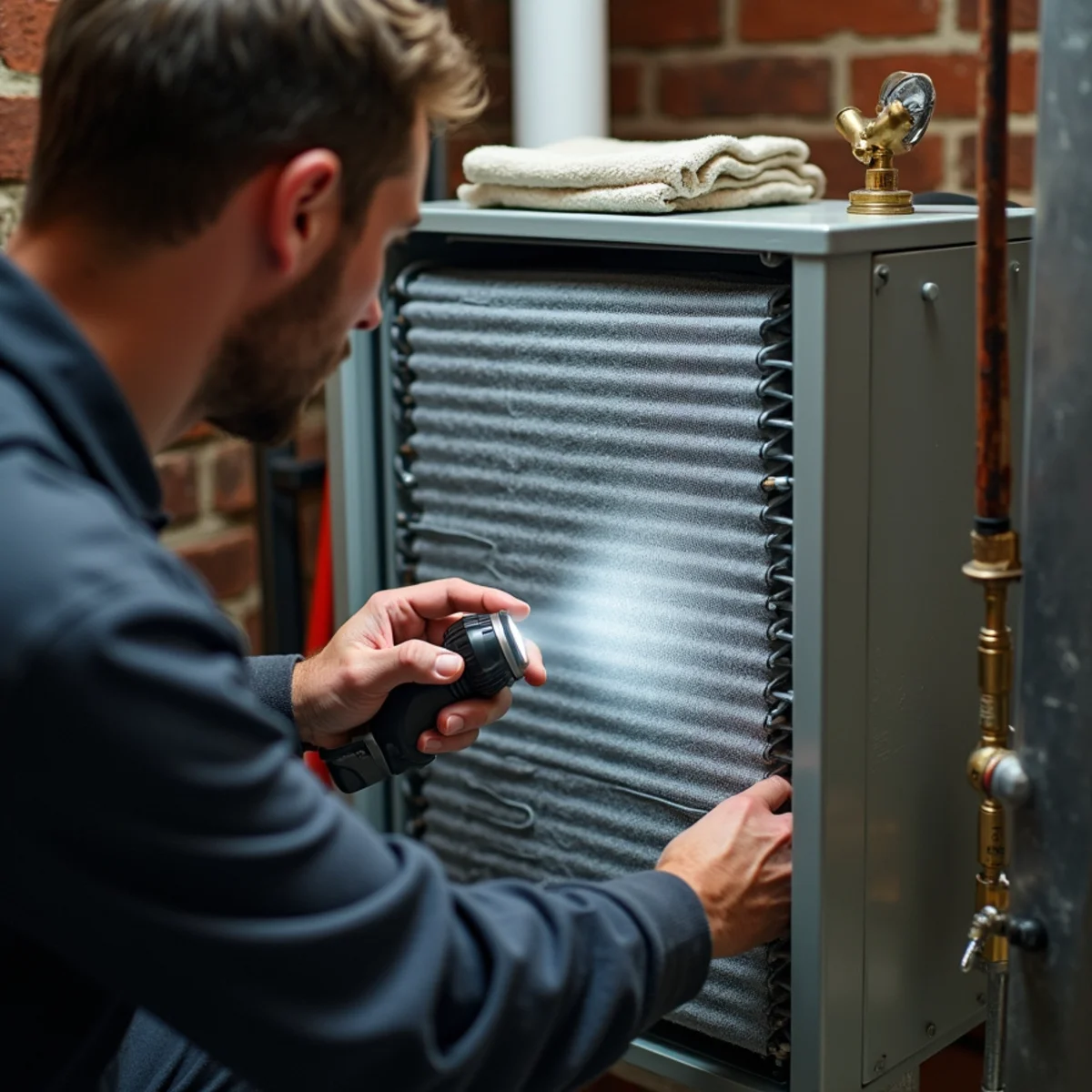
Frozen coils
Ice on the indoor coil or the suction line means the coil is running below freezing, usually from weak airflow or low refrigerant. Switch the thermostat from Cool to Off and run the fan alone to thaw it. Running a frozen system risks the compressor. If it freezes again after thawing, the cause needs a technician.
Do not chip or scrape the ice; the fins and tubing damage easily. Let it melt.
The ice is a symptom. The technician checks the filter, coil, blower and returns before the refrigerant charge, because adding refrigerant to a coil that froze from poor airflow fixes nothing.
Water leaks
In a Town colonial, the indoor coil sits on the furnace in the basement and drains to a floor drain or a small condensate pump. Split-levels and capes with an attic air handler drain through a pan above a ceiling. Leaks come from:
- A condensate line clogged with algae and sludge, which grow fast in humid Hudson Valley summers
- A condensate pump that quit
- A cracked or rusted drain pan
- Meltwater from a coil that froze
Clogged condensate drains
Many systems have a float switch that shuts the AC off when the pan fills. The house warms up, but the ceiling stays dry. Clearing and treating the line restores cooling.
On muggy Hudson Valley days the coil can pull several gallons of water a day out of the house air, so a backed-up drain also leaves the house clammy.
Capacitors, contactors and fan motors: the common July failures
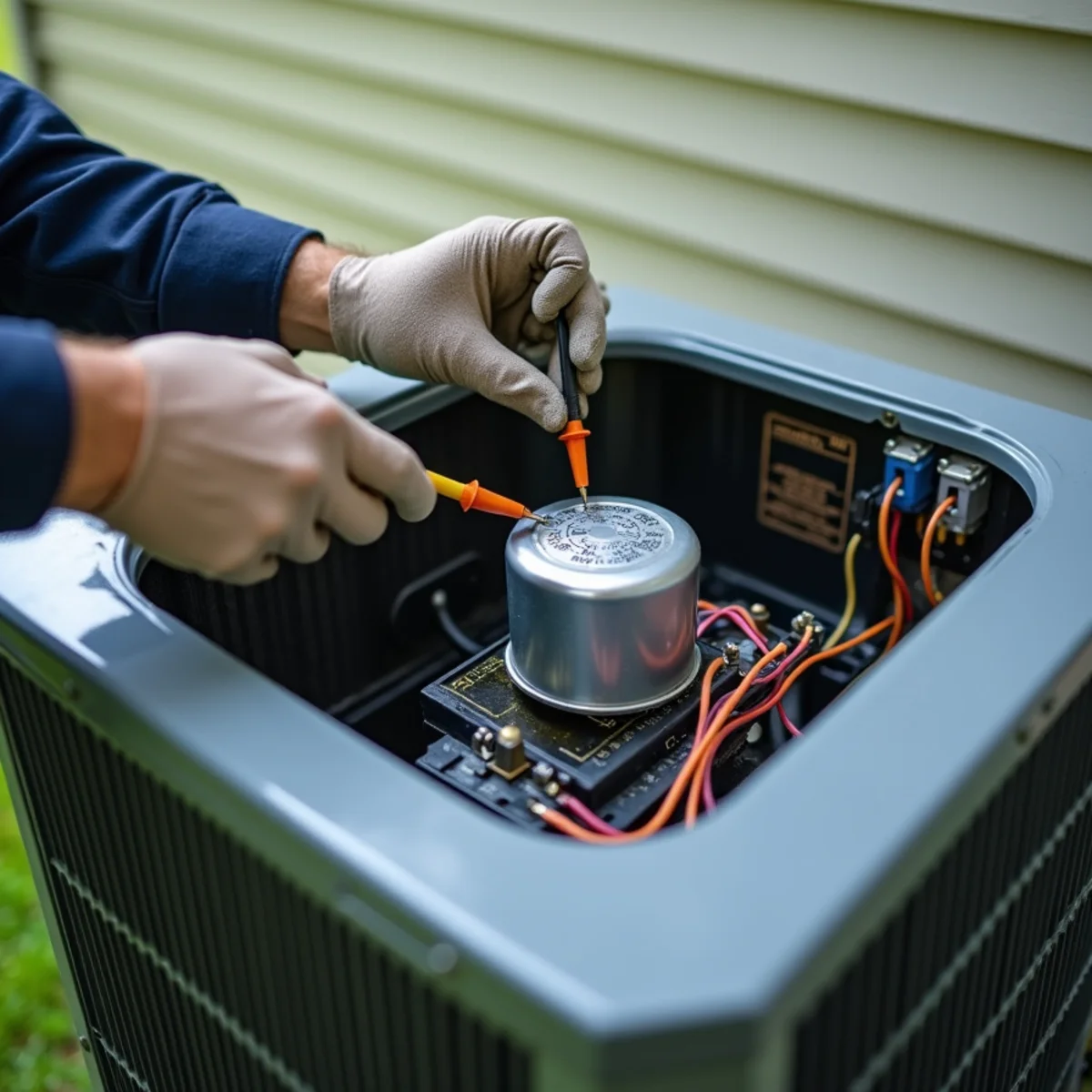
Most no-cooling calls in a July heat wave trace back to a few electrical parts in the outdoor unit:
- Run capacitor. It gives the compressor and fan motor their starting kick. Heat weakens it, and a bulged top is a giveaway. The unit hums, but the fan does not spin.
- Contactor. The relay that switches the outdoor unit on. Pitted contacts, or ants nesting between them, keep it from closing.
- Condenser fan motor. Worn bearings and overheating windings stop the fan, and the compressor cuts out on its overload.
- Wiring. Mice chew low-voltage wires over the winter, and connections corrode in units that sat idle since September.
When the part is on the truck, these are usually fixed on the first visit and then tested.
Safety warning: A capacitor can hold a dangerous charge even with the power off. Leave the outdoor unit's panels closed and let the technician test it.
Refrigerant leaks in older R-22 and R-410A systems: what the options are
Many systems installed before about 2010 run on R-22. Its production and import ended in the U.S. on January 1, 2020, so only reclaimed or stockpiled supply remains, and it is costly. Most systems from the 2010s through 2024 use R-410A, which remains serviceable. Since January 1, 2025, new split systems ship with lower-GWP refrigerants such as R-454B or R-32.
When a technician finds a leak, the options are:
- Repair the leak and recharge. This makes sense when the leak is at an accessible spot, such as a flare fitting or service valve, and the rest of the system is sound.
- Replace the leaking part, often the indoor coil. On an R-22 system, that rarely pays.
- Replace the system. For R-22 equipment, or an R-410A unit that also has a tired compressor, this usually wins over the following years.
Recharging without fixing the leak just schedules the next breakdown.
Finding the leak comes first, with an electronic detector, bubble solution or a nitrogen pressure test. Any work that opens the refrigerant circuit requires a technician with EPA Section 608 certification; ask which technician on the job holds it.
Safety warning: Never add refrigerant yourself. Handling refrigerant requires EPA Section 608 certification.
What to check before you call: thermostat, filter, breaker, outdoor unit
These checks are safe for any homeowner:
- Thermostat. Set it to Cool, a few degrees below room temperature, with the fan on Auto. Replace the batteries if the screen is blank.
- Filter. Pull the furnace filter. If it is gray and packed, replace it.
- Breaker. Look for a tripped AC or furnace breaker and reset it once. If it trips again, leave it off and call.
- Furnace switch. The indoor blower runs from the furnace in most Town homes, so the furnace's on/off switch, which looks like a light switch, must be on.
- Outdoor unit. Clear leaves and clippings from around it by hand and keep shrubs about two feet back. Leave the panels closed.
- Drain pan. Standing water in the pan means the float switch has probably shut the AC off.
Before you call, photograph the model label on the outdoor unit and furnace, the thermostat screen and any ice or water, without removing panels. Note whether the indoor blower, the outdoor unit or both run.
If everything checks out, call (321) 478-0693. In a heat wave, mention anyone at home who is elderly or medically fragile; our 24/7 emergency HVAC repair page explains after-hours dispatch.
Repair or replace an aging air conditioner
Central AC in this cooler climate typically lasts 15 to 20 years, since the cooling season is short. Replacement deserves a look when:
- The system uses R-22 and needs refrigerant or a compressor
- The compressor fails on a unit past 12 to 15 years
- Repairs come back every summer
- The furnace is near the end too. The AC coil sits on the furnace and the blower serves both, so replacing them together keeps the system matched.
New equipment carries SEER2 ratings, in effect since January 1, 2023. A heat pump in place of the AC can also carry part of the heating load, and NYS Clean Heat incentives through Central Hudson may apply; amounts and rules change, so read how Central Hudson heat pump rebates work and check the utility's program page. Our central air replacement page covers sizing and installation, and the same timing hits subdivisions in New Windsor.
If you replace
Ask that the quote include:
- An ACCA Manual J load calculation, not a copy of the old unit's size
- Model numbers for the outdoor unit and matched coil, with line set, electrical, condensate, permit and old-unit removal as separate line items
- Startup testing: refrigerant pressures checked against the manufacturer's data, airflow and the condensate drain
- Warranty registration and who handles it; many manufacturers require it within a set period
Every HVAC technician we send is licensed where New York requires it, and insured.
How an AC repair visit works, step by step
The order is the same on every call, so the fix matches the cause.
- The call. Tell us what the system is doing: warm air, ice on the line, water at the furnace, an outdoor unit that will not start. Mention the age of the unit if you know it.
- Check what you already did. The technician confirms the thermostat, filter and breaker so nothing obvious is missed.
- Measure. Electrical readings on the capacitor, contactor and motors; refrigerant pressures and temperatures; airflow and the temperature drop across the coil.
- Find the cause. A frozen coil is traced to airflow or charge, and a low charge is traced to its leak before anything is added.
- Written price. You get the repair and its price in writing, and a replacement option if the unit is old or runs on R-22. A diagnosis is not a repair authorization.
- Repair and test. After the fix, the system runs long enough to confirm the temperature drop, the outdoor fan and compressor, and that the condensate drains.
- Wrap-up. You hear what was done and when the system should next be serviced.
What affects AC repair cost
You get a written price after diagnosis and before any work. The factors that move it:
- The failed part. A capacitor or contactor is a small repair. A fan motor is moderate. An indoor coil or compressor is major.
- Refrigerant type. R-22 costs far more than R-410A because supply is limited. Newer refrigerants need compatible parts and tools.
- Leak search. Finding a slow leak in a coil takes time.
- Access. A basement coil is easy to reach. An attic air handler in July heat takes longer.
- Parts on hand. Common capacitors and contactors ride on the truck; a model-specific motor may need ordering.
- Time of the call. Nights, weekends and holidays can carry after-hours rates, which you hear before dispatch.
- Manufacturer coverage. Newer registered systems may still have parts coverage from the manufacturer; labor typically does not.
Booking a diagnostic visit is not approving a repair. Nothing gets replaced until you have the finding and the written price and say yes.
Why call us for AC repair in Newburgh
AC season here is short and sharp, and the hottest week is when every system gets tested at once. Here is what Newburgh Bay Air Pros offers when yours quits.
A person answers in a heat wave
Calls to (321) 478-0693 are answered 24 hours a day, and you get an arrival window on the call.
Central air and ductless
Technicians who work on condensers, furnace-mounted coils and attic air handlers, plus the mini-splits that cool the city's radiator homes.
Written price before work
You approve a written price after diagnosis, and you hear about any after-hours rate before dispatch.
Licensed where required, and insured
Every HVAC technician we send is licensed where New York requires it, and insured.
Honest answers on R-22
On older systems, the technician explains the repair, the refrigerant cost and the replacement option side by side.
AC Repair Across Newburgh and Nearby Towns
Calls come in from all over our HVAC service area around Newburgh. These are the towns we hear from most for ac repair:
We also cover Fishkill, Walden and Washingtonville.
AC Repair FAQs
Why is my AC running but not cooling the house?
The most common causes are a clogged filter or dirty coil choking airflow, a refrigerant leak, a dirty outdoor coil, or a failed capacitor that leaves the compressor or outdoor fan off while the indoor blower keeps running. Check the thermostat, filter and breaker first. If those are fine, a technician measures pressures and temperatures to find the failing part.
Can an older AC that uses R-22 still be repaired?
Yes, for many repairs. Capacitors, contactors, fan motors and drain problems have nothing to do with the refrigerant. A leak is different: R-22 production ended in 2020, so recharging relies on limited reclaimed supply and costs far more. On an older R-22 system with a leak or a failing compressor, the technician will usually lay out replacement next to the repair.
How fast can a technician come out during a heat wave?
It depends on where the nearest available technician is and how many cooling calls are coming in, so we do not promise a set time. Calls to (321) 478-0693 are answered 24/7, and you get an arrival window on the call. Technicians cover Newburgh, Beacon, Cornwall and our other service areas. Tell us if anyone at home is vulnerable to heat.
Should I repair or replace a 15-year-old air conditioner?
Here, a 15-year-old system can still have years left, because our cooling season is short. Repair usually makes sense for a capacitor, contactor, fan motor or drain. Replacement makes more sense if it uses R-22 and needs refrigerant, if the compressor is failing, or if the furnace beneath it is also near the end. The technician prices both so you can decide.
Can you add air conditioning to a Newburgh house with radiators and no ducts?
Yes. Most radiator-heated homes in the city cool with a ductless mini-split: an outdoor unit and slim indoor heads connected by a small line set, no ductwork needed. A cold-climate heat pump version can also share the heating load with the boiler. Our ductless mini-split page explains the options and installation.
Why won't my outdoor AC unit turn on?
Check the thermostat is set to Cool below room temperature, then the breaker and the outdoor disconnect switch near the unit. If those are on and the indoor fan runs but the outdoor unit stays silent or only hums, a failed capacitor or contactor is the usual cause, or a float switch has shut the system off because the drain is backed up. Those are technician repairs, because the parts hold a dangerous charge.
Do you repair ductless mini-splits too?
Yes. Technicians we send repair ductless mini-splits and heat pumps as well as central air: heads that blow warm air, drip water, ice up or show an error code. Note the code and the brand before you call. See ductless mini-split and heat pump service for how those systems are installed and maintained.
How much does AC repair cost in Newburgh?
It depends on what failed. A capacitor or contactor is a small repair; an indoor coil or compressor is major. Refrigerant type, time spent finding a leak, attic access and after-hours timing also move the price. The technician diagnoses first, and you approve a written price before any work starts.
Does AC refrigerant work require a credential?
Yes. Anyone who opens a refrigerant circuit, whether for a leak repair, a recharge, refrigerant recovery or a coil or compressor swap, needs EPA Section 608 certification. Ask which technician on the job holds it. Never add refrigerant yourself, and a recharge without finding the leak is not a repair.
When should I schedule an AC tune-up in Newburgh?
In spring, ideally April or May, before the June heat and the rush of first-hot-day calls. A tune-up typically cleans the outdoor coil, tests the capacitor and contactor, flushes the condensate line, and checks airflow and refrigerant pressures. Book sooner if cooling weakened last summer or the drain backed up.
Last reviewed by Newburgh Bay Air Pros. Checked before each heating and cooling season.