Furnace problems we fix in Newburgh homes
Newburgh heats two ways. Most city houses built before 1940 run on boilers and radiators, which our steam and hot water boiler repair page covers. Furnaces live mostly in the Town of Newburgh: post-war ranches and 1980s to 2000s colonials and split-levels in Meadow Hill, Gardnertown, Colden Park, Balmville and Orange Lake, where one forced-air system heats in winter and carries the AC coil in summer. Some city houses were converted to forced air decades ago, usually with an oil furnace.
The furnace calls we hear most:
- No heat, or a furnace that tries to start and gives up
- Cold air from the registers
- Short cycling: burners on for a minute, off, and on again
- Lockouts: a lit reset button on an oil burner or a blinking fault code on a gas furnace
- Smells or noises that were not there last winter
If the heat stopped tonight, the no-heat checklist for Newburgh homes lists the safe checks to try before you call.
Before you call
- Stop resetting it. A furnace that locks out again after a reset, or a breaker that trips twice, is a safety control doing its job. Leave it off.
- Take two photos: the model label if you can see it without removing a panel, and the blinking light through the small window in the lower door.
- Note the timeline: when the heat stopped and what the thermostat reads.
Safety warning: Smell gas or hear a carbon monoxide alarm? Get everyone out. Call 911 or Central Hudson's gas emergency line from outside, then call us. Do not flip switches or try to restart the furnace.
Gas furnace repair: igniters, flame sensors, inducer motors and control boards
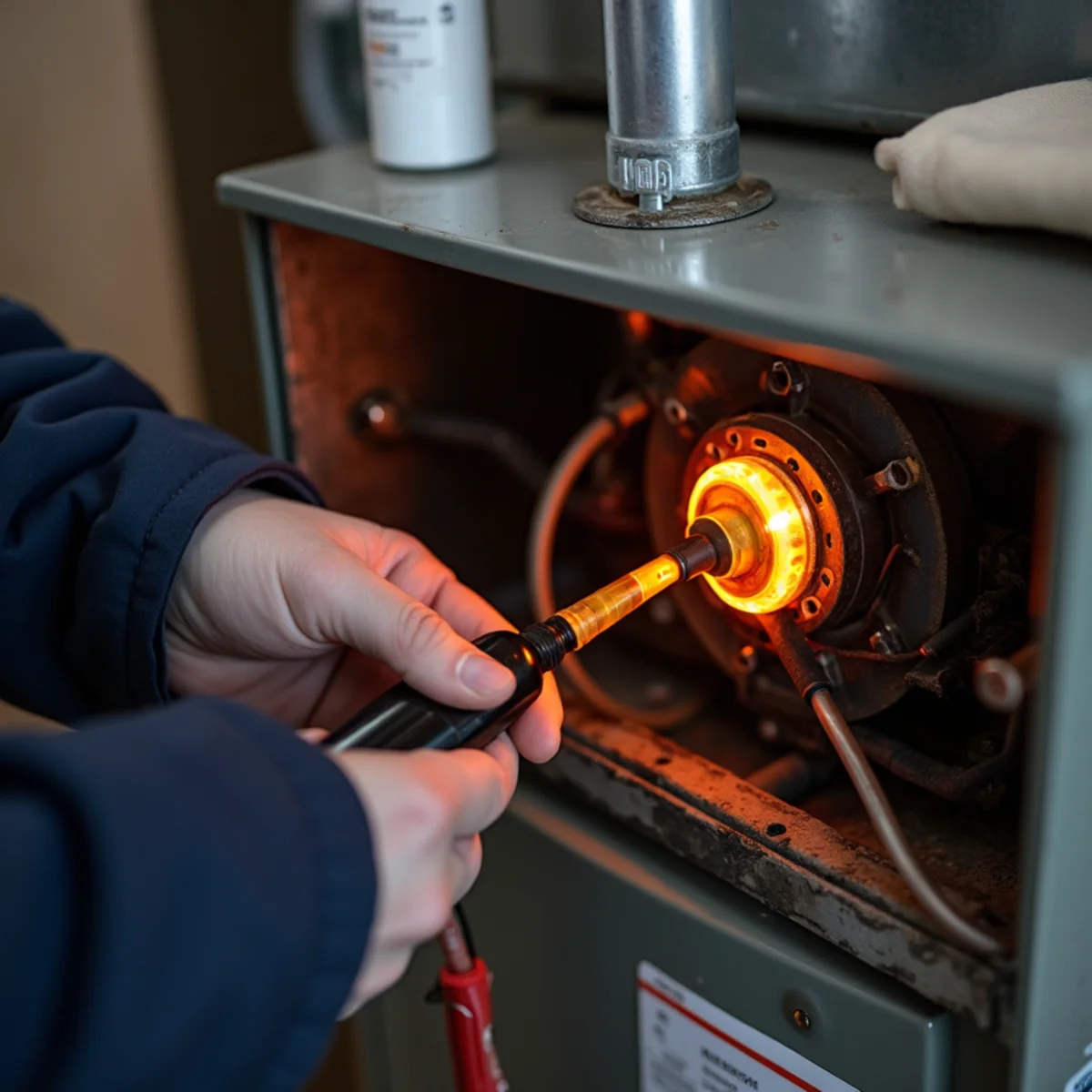
Gas furnaces in the Town run on Central Hudson natural gas, with propane in homes beyond the mains. Every start follows a fixed sequence: inducer, pressure switch, igniter, gas valve, flame sensor, then blower. The technician traces where it stops.
Igniters and flame sensors
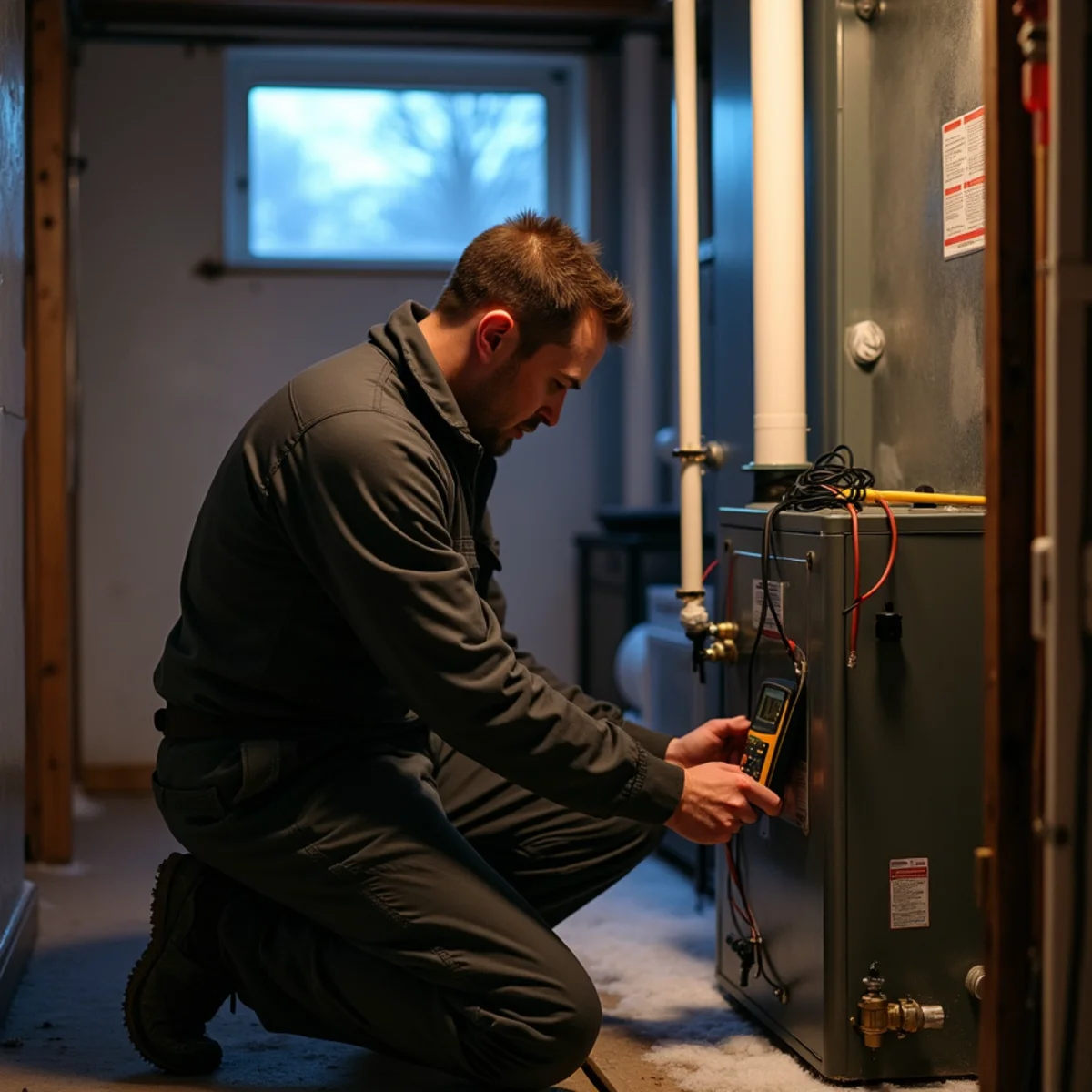
A cracked hot surface igniter means the inducer runs but no flame ever appears. A coated flame sensor lets the burners light, then shuts them off a few seconds later. Both get a meter test before anything is replaced.
Inducer motors and pressure switches
High-efficiency furnaces vent through plastic pipes out a side wall. After a nor'easter, drifted snow or ice can block them, the pressure switch never closes, and the furnace locks out. Pipes, inducer bearings and hoses are checked before the switch takes the blame.
Control boards
A blinking fault code is a starting point, not a verdict. Boards do fail, but they are replaced only once the parts around them test fine.
Oil furnace repair: burners, nozzles, filters and restarts after running out of oil
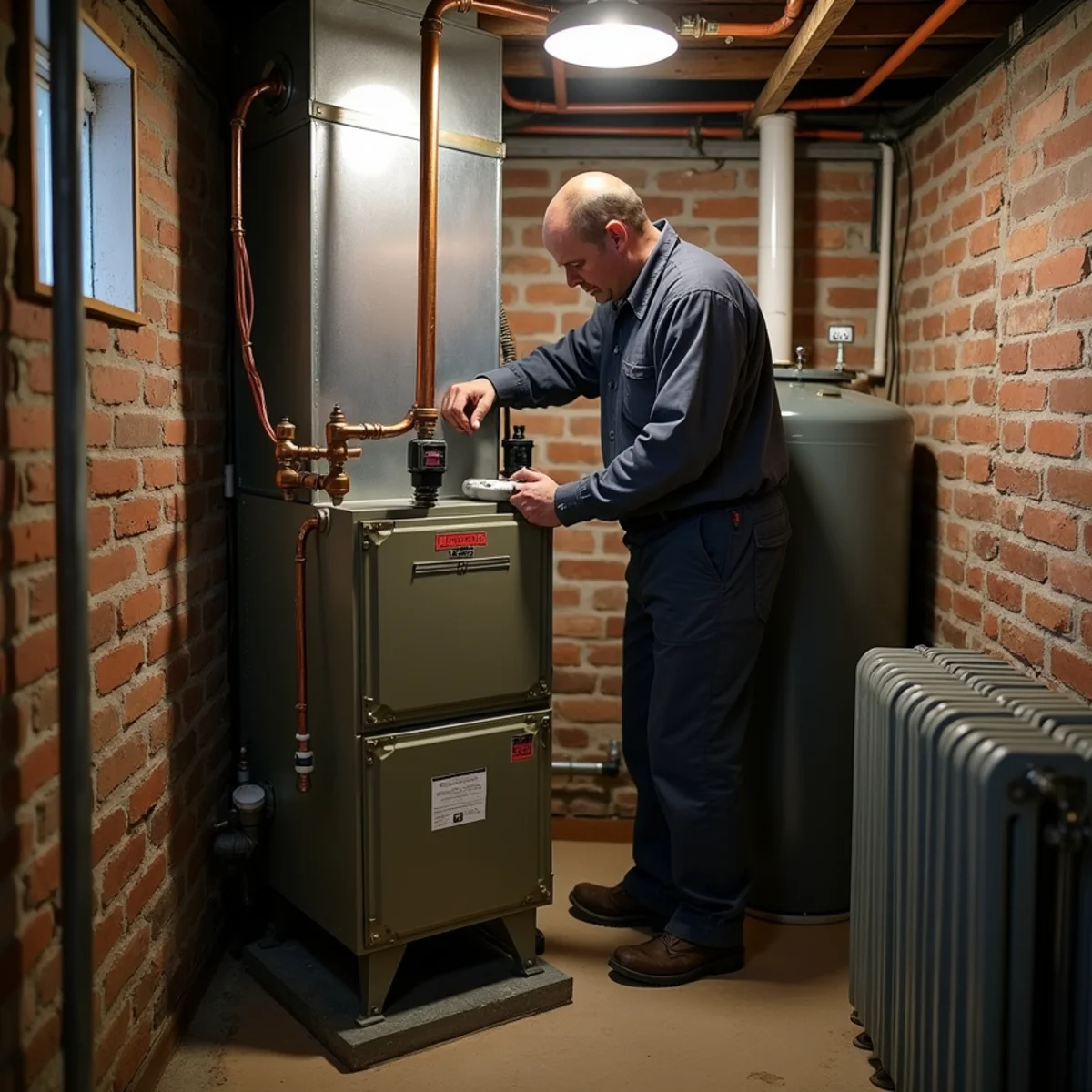
Oil heat is still common in converted city houses and in homes off the gas mains in rural New Windsor and the hills of Cornwall. An oil furnace fires a gun-style burner, and its usual failures are different from gas:
- Nozzle. Worn or clogged, it sprays unevenly and causes smoky starts, soot and lockouts.
- Oil filter. Sludge from an aging basement tank plugs it.
- CAD cell. The flame eye. When dirty, it tells the control there is no fire.
- Fuel pump, electrodes and transformer. Weak oil pressure or a weak spark.
Running out of oil
A delivery that runs late in a cold snap leaves air in the fuel line. New oil alone does not fix it. The burner has to be primed and bled, and sludge pulled from the tank bottom often clogs the filter and nozzle, so both are usually replaced.
Safety warning: Press an oil burner's reset button once at most. Repeated resets pump unburned oil into the combustion chamber, and it can flash when the burner finally lights.
Furnace blowing cold air, short cycling or shutting off: what each symptom points to
Blowing cold air
First confirm the thermostat fan is set to Auto, not On. If it is, the burners are not staying lit. On gas, suspect the flame sensor, igniter or a blocked vent. On oil, suspect the nozzle, filter or CAD cell.
Short cycling
The high limit switch opens when heat cannot leave the heat exchanger fast enough. A clogged filter, closed registers, a dirty blower wheel or undersized returns are the usual causes. A furnace that was oversized at installation can short cycle from its first day.
Shutting off and staying off
That is a lockout after repeated failed starts. A gas furnace may retry an hour later; an oil burner shows a lit reset button.
Burners light but little air moves
Suspect the blower: a weak capacitor, worn bearings or a motor that hums and stops. Trapped heat then trips the high limit. The technician measures the capacitor and motor draw before replacing either.
The thermostat never calls
Dead batteries, a loose wire or a new smart thermostat wired to the wrong terminals can look like a dead furnace. The technician confirms the call for heat reaches the furnace first.
Running nonstop
On an 18°F night, a correctly sized furnace may run almost constantly. One that cannot keep up on a mild day has a weak blower, leaking ducts or a burner firing below its rating.
High-efficiency furnace shuts down with water nearby
Condensing furnaces, the white-PVC-vented kind common in newer Town of Newburgh homes, make water as they run. If the condensate trap or drain line clogs, or the line freezes where it runs through a cold basement or out a wall, the pressure switch stops the furnace. The technician clears the trap and drain and checks why it backed up.
Flame rollout or a loud bang at ignition
A bang or a puff of flame when the burners light means gas built up before it caught. That is delayed ignition, usually dirty burners or a weak igniter. If flame rolls out of the burner area, a rollout switch shuts the furnace down. Do not reset a tripped rollout switch: it points to a blocked flue or heat exchanger trouble that needs testing first.
Noises and smells
A dusty smell on the first cold morning is normal and fades within the hour. A squeal usually means a blower belt or motor bearings. Scraping or rattling points to a loose blower wheel or panel. A burning-plastic or electrical smell means shut the furnace off at the switch and call.
What you can check, and what needs a technician
- Safe for you: thermostat mode, setpoint and batteries; the fan on Auto; the furnace switch and breaker (one reset only); the filter; supply registers and returns left open; the oil tank gauge; ice or snow blocking a side-wall vent outside.
- Technician only: anything behind the burner door, the flame sensor and igniter, gas valve and gas piping, the control board, a tripped rollout or limit switch that keeps tripping, and any oil burner that locks out again after one reset.
What a heating repair visit looks like, from call to restored heat
- Call (321) 478-0693. A person answers at any hour. Tell us the symptom, the fuel (gas, propane or oil) and where the furnace sits.
- Dispatch. We send the nearest available technician, and you get an arrival window on the call. On the coldest January nights, windows can run longer.
- Safety check. The technician checks for odors, looks at the venting and takes a carbon monoxide reading if anything seems off.
- Diagnosis. Fault codes and meter readings identify the failed part.
- Written price. You approve the repair and its price before work starts.
- Repair and test. Full heating cycles confirm ignition, flame, temperature rise and shutdown.
Diagnosis finds the cause; it does not authorize a repair. When the work touched the burner, gas valve or venting, the final check includes a combustion and carbon monoxide reading.
Landlords can call for a tenant's unit; tell us who will let the technician in. For a house losing heat fast, our 24/7 emergency HVAC repair page explains how night calls work.
Repair or replace: furnace age, heat exchanger condition and repair history
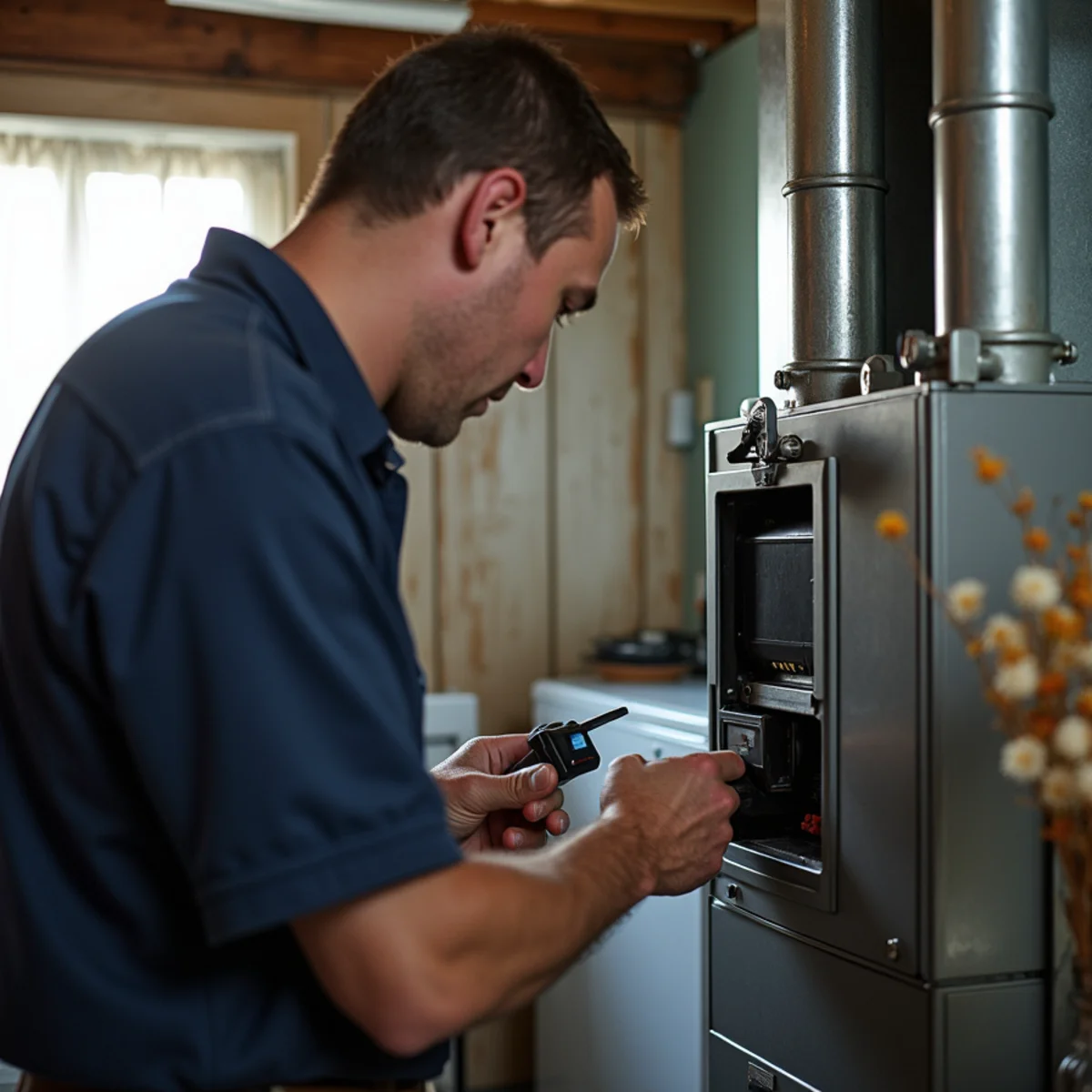
A gas furnace typically lasts 15 to 20 years, and a well-kept oil furnace can last as long. Age alone settles nothing. Three things decide it:
- Heat exchanger condition. This metal chamber keeps combustion gases, including carbon monoxide, out of your air. Once it cracks or rusts through on an older furnace, replacement is usually the answer, and the furnace stays off until then.
- Repair history. One repair in five years is wear. An inducer last winter and a control board this fall is a pattern.
- The rest of the system. In a Town colonial, the furnace blower also serves the central AC coil, so an aging outdoor unit argues for replacing both. An oil furnace adds the fuel question: oil again, Central Hudson gas if a main reaches your street, or a heat pump.
Repair usually makes sense when the failure is isolated and explainable, parts are still made for the model, and the heat exchanger and combustion readings show no concern.
Our furnace and central air replacement page covers those choices, and ductless heat pumps suit additions the ducts never reached.
If replacement is the answer
Size the new furnace from an ACCA Manual J load calculation, not the old furnace's label. Many Town furnaces were oversized, and the same size again brings the same short cycling.
Replacement generally needs a permit from the City of Newburgh Building Department or your town's. Ask who pulls it, who schedules the inspection and who handles closeout. If the central AC is replaced too, refrigerant work requires EPA Section 608 certification; ask which technician holds it. Our installation page covers sizing, permits and startup testing for a new furnace.
Every HVAC technician we send is licensed where New York requires it, and insured.
Why furnaces fail here: long heating seasons, older ductwork, skipped tune-ups
January and February lows average near 18°F, the season runs from October into April, and damp river air sharpens the cold. More run hours mean more failures.
- Long seasons wear out igniters, blower bearings and inducers sooner.
- Older ductwork. Leaky, undersized returns in 1970s and 1980s subdivisions, and cramped ducts in converted city houses, overheat the heat exchanger and trip limits.
- Snow buries side-wall vents after big storms.
- Damp basements rust burners, cabinets and oil lines.
- Skipped tune-ups. An oil burner needs a yearly cleaning, nozzle and filter to burn clean. A gas furnace needs its flame sensor, venting and safety controls checked.
A fall tune-up moves most midwinter breakdowns to October. Ask for one when you call. Early fall is the time, before the first sustained cold snap.
A cold room is not always a furnace problem
A back bedroom or a room over the garage that never warms usually has an airflow problem, not a small furnace. Duct joints in basements and crawl spaces leak, freeze-thaw movement in unheated spaces loosens them further, and uninsulated runs shed heat on the way. The technician checks airflow at the register and the reachable ducts before anyone talks about a bigger furnace.
What affects furnace repair cost
You get a written price after diagnosis and before any repair. These factors move it most:
- The failed part. A flame sensor or igniter is a small job. An inducer, blower motor, gas valve or control board costs more. A heat exchanger often means replacement.
- Fuel type. Oil repairs usually include a nozzle and filter, and an outage may need the burner primed.
- Furnace design. Two-stage and variable-speed models use pricier motors and boards.
- Access. An open basement is quick; a tight closet or attic takes longer.
- Parts on hand. A model-specific board may need ordering and a second visit.
- Time of the call. Nights, weekends and holidays can carry after-hours rates, which you hear before dispatch.
- Manufacturer coverage. Some parts on newer furnaces may still be under the manufacturer's warranty; labor typically is not.
For more detail, read what furnace and boiler repair costs in Newburgh, NY.
Why call us for furnace repair in Newburgh
A furnace failure in a Hudson Valley January becomes a frozen-pipe problem within hours. Here is what you can count on when you call Newburgh Bay Air Pros.
A person answers at 3 a.m.
Calls to (321) 478-0693 are answered 24 hours a day, 7 days a week, including holidays. You get an arrival window on the call, not a voicemail.
Gas, propane and oil covered
Technicians who know inducer-and-igniter gas furnaces and gun-burner oil furnaces alike, including priming a burner after the tank runs dry.
Written price before work
You approve a written price after diagnosis and before any repair, and you hear about after-hours rates before anyone is dispatched.
Licensed where required, and insured
Every HVAC technician we send is licensed where New York requires it, and insured.
Straight talk on repair or replace
On an older furnace, the technician explains the repair and the replacement option, including fuel choices, so you decide with the facts in hand.
Furnace and Heating Repair Across Newburgh and Nearby Towns
Calls come in from all over our HVAC service area around Newburgh. These are the towns we hear from most for furnace repair:
We also cover Fishkill, Walden and Washingtonville.
Furnace and Heating Repair FAQs
How fast can an HVAC technician get to my home in Newburgh?
It depends on where the nearest available technician is, the roads and how many no-heat calls come in that night, so we do not promise a set time. When you call (321) 478-0693, you get an arrival window based on the real situation. Technicians cover the City and Town of Newburgh, Beacon and our other service areas. Mention anyone at home who is elderly, an infant or medically fragile.
Do you repair both gas and oil furnaces?
Yes. Technicians work on natural gas furnaces on Central Hudson service, propane furnaces beyond the mains, and oil-fired furnaces, including nozzle and filter changes, CAD cell and primary control diagnosis, and priming a burner after the tank runs dry. If you heat with radiators, see our boiler repair page.
Is it safe to keep running a furnace that smells like burning or gas?
A faint dusty smell in the first minutes of the season is normal. Gas is not: leave the house, call 911 or Central Hudson's gas emergency line from outside, then call us. A lasting electrical or burning-plastic smell, or oil fumes and smoke from an oil furnace, means turning it off at the thermostat and leaving it off until a technician checks it.
Do you give a price before the repair starts?
Yes. After diagnosis, the technician explains what failed and gives you a written price, and nothing is repaired until you approve it. If after-hours rates apply to a night or weekend call, you hear that on the phone before dispatch. When a repair on an older furnace nears the cost of replacing it, you see both options.
My oil furnace stopped and the reset button is lit. Should I press it?
Once, at most. First make sure the tank has oil and the burner's emergency switch, often at the top of the basement stairs, is on. If the burner fires and stays lit, still book a service call. If it fails again, stop. Each failed try sprays oil into the combustion chamber, which is a fire and smoke risk. Call (321) 478-0693 instead.
Is it the thermostat or the furnace?
Check the thermostat first. If the screen is blank, replace the batteries. Set it to Heat and a few degrees above room temperature, with the fan on Auto. If the furnace still does not start within a few minutes, and the switch and breaker are on, the problem is likely the furnace or the wiring between them. The technician confirms the call for heat reaches the furnace before replacing anything.
Can I clean a dirty flame sensor myself?
We do not recommend it. The flame sensor sits inside the burner compartment next to the gas valve and igniter, and the igniter breaks easily. A sensor that keeps getting dirty can also point to a combustion or venting problem that cleaning will not fix. A technician cleans or replaces it, then checks the flame and the venting before the furnace goes back into service.
How much does furnace repair cost in Newburgh?
It depends on what failed. A flame sensor or igniter is a small job; an inducer, blower motor, gas valve or control board costs more, and a cracked heat exchanger usually leads to a replacement quote. Fuel type, access, parts on hand and after-hours timing also move the price. The real number comes after diagnosis, as a written price you approve before work starts. Our furnace and boiler repair cost guide explains each factor.
Should I repair or replace my furnace?
Repair usually makes sense when one part failed, parts are still available, and the heat exchanger and combustion readings are sound. Replacement deserves a quote when the heat exchanger is cracked, repairs have become a pattern, or a gas furnace is near the end of its typical 15 to 20 years. The technician explains both options. Our furnace replacement page covers sizing, permits and fuel choices.
Last reviewed by Newburgh Bay Air Pros. Checked before each heating and cooling season.