The short answer
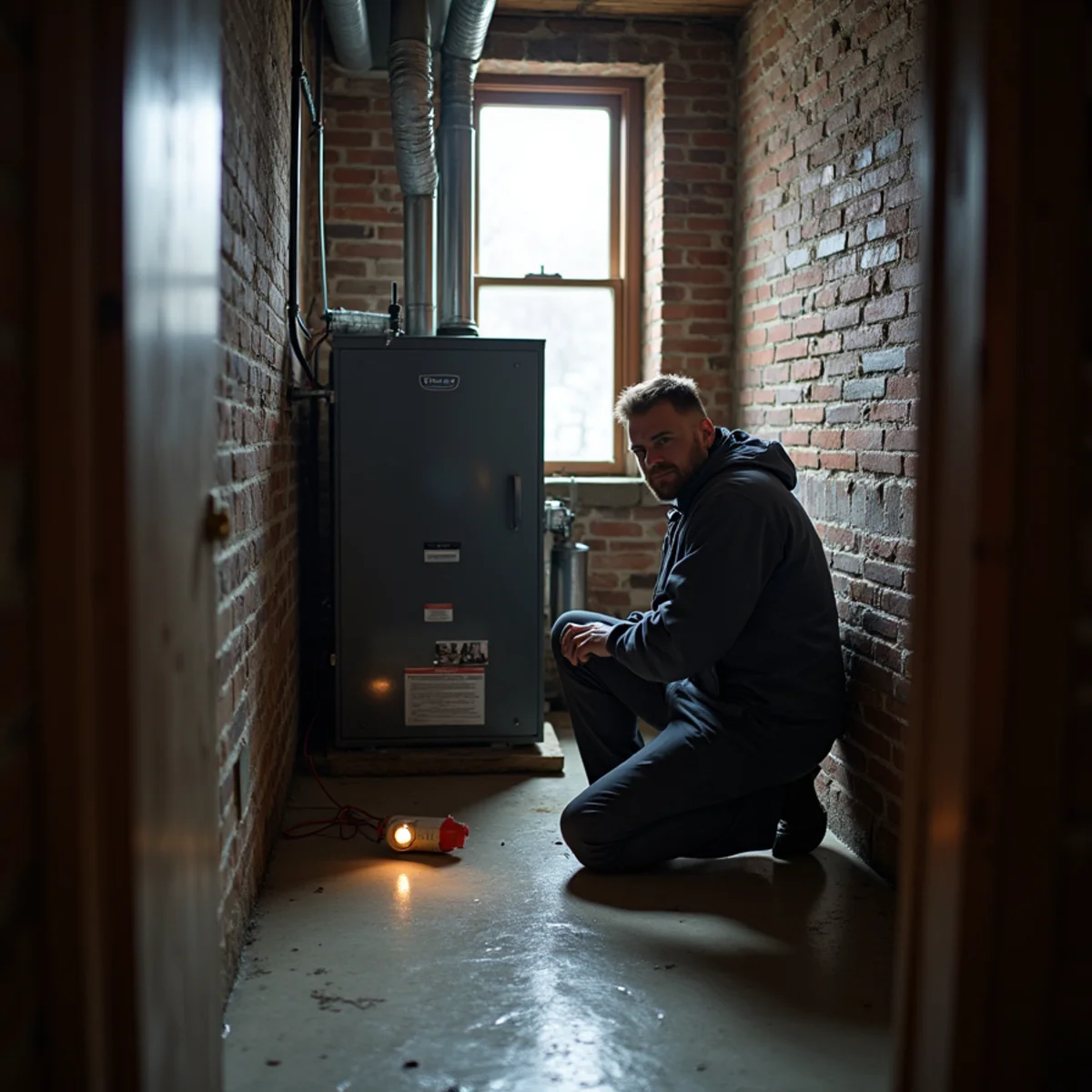
When the heat goes out, check the thermostat setting and batteries, the breaker and the emergency switch at the top of the basement stairs, and your fuel: the oil tank gauge or whether other gas appliances work. On a boiler, look at the water level or pressure gauge. Press an oil burner reset once only, then call.
The city's median house was built in 1938, so steam and hot water boilers, oil tanks and radiators are normal here, while Town of Newburgh subdivisions mostly run gas furnaces. The checks below are sorted by system, and none of them involve opening a burner or electrical compartment.
Gas smell, CO alarm or smoke: stop here
Safety warning: If you smell gas (a rotten-egg odor), a carbon monoxide alarm is sounding, or you see smoke coming from the boiler or furnace, do not troubleshoot anything. Get everyone out of the house. Do not flip light switches or use the thermostat on the way out. From outside, call 911 or Central Hudson's gas emergency line. Call us once they have made the house safe.
The same goes for a strong oil smell or soot puffing from around the burner. A light dusty smell the first time the heat runs in October is normal and burns off after a short run.
Start with the thermostat and the power
Every system, old or new, needs a call for heat and electricity. These checks take five minutes:
- Thermostat. Set it to Heat and raise it three or four degrees above the room temperature. If the screen is blank, change the batteries. Older round dial thermostats on boilers sometimes get bumped to Off when someone dusts.
- The emergency switch. Oil burners and many boilers have a switch with a red plate at the top of the basement stairs or on the boiler room door frame. It looks like a light switch and gets flipped off by accident more often than you would think. Make sure it is on.
- The breaker. Look for a tripped breaker labeled boiler, burner or furnace. Reset it one time. If it trips again, leave it off and call; that is an electrical fault for a technician.
- The right unit. Many East End two- and three-family buildings have one boiler per apartment. Make sure you are checking yours.
- Schedules and holds. A programmable or smart thermostat can sit on a vacation, away or hold setting long after you meant it to. Clear the schedule and set the temperature by hand to test.
If you heat with oil: the tank and the reset button
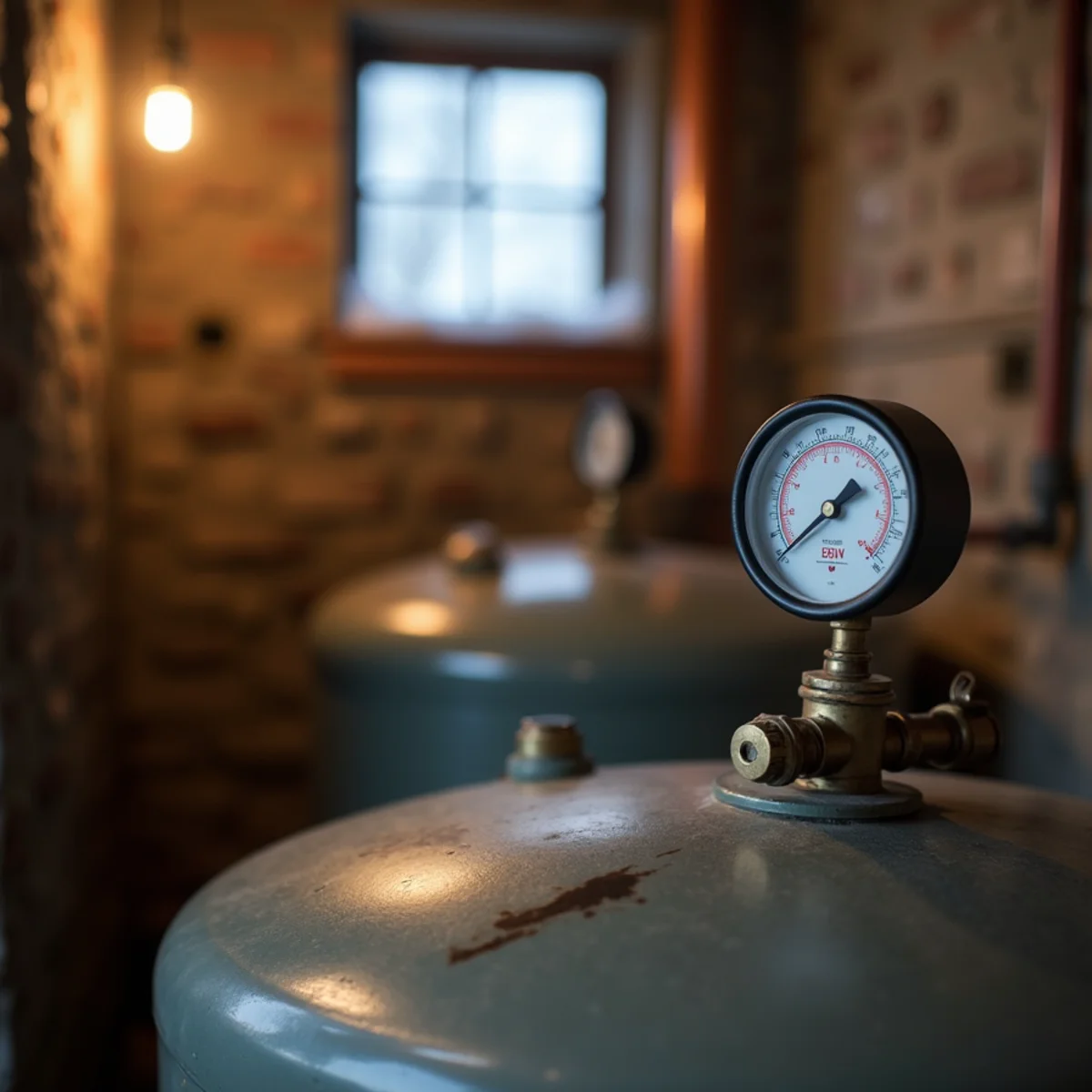
Oil is common off the gas mains, in rural New Windsor, the Cornwall hills and parts of Walden. The most common oil no-heat call is the simplest: an empty tank. Read the float gauge on top of the tank. If it sits near empty, call your oil company first.
If the burner stopped and the tank has oil, you will usually find a red reset button on the burner's primary control. Press it once. If the burner fires and keeps running, keep an eye on it. If it starts and stops again, or does nothing, do not press it again. Each press sends oil into the combustion chamber, and repeated resets can flood it.
If you ran out of oil and just took a delivery, the burner usually needs to be primed (bled) to push air out of the line. That is a technician job; resetting will not fix it.
After the tank, the usual causes are a clogged oil filter or nozzle, a dirty CAD cell (the eye that confirms the flame) or a failing fuel pump. These are routine boiler and oil burner repairs, but not do-it-yourself jobs.
If you have a boiler: water level and pressure
Look at the boiler from the outside. You are reading gauges, not adjusting anything.
Steam boilers
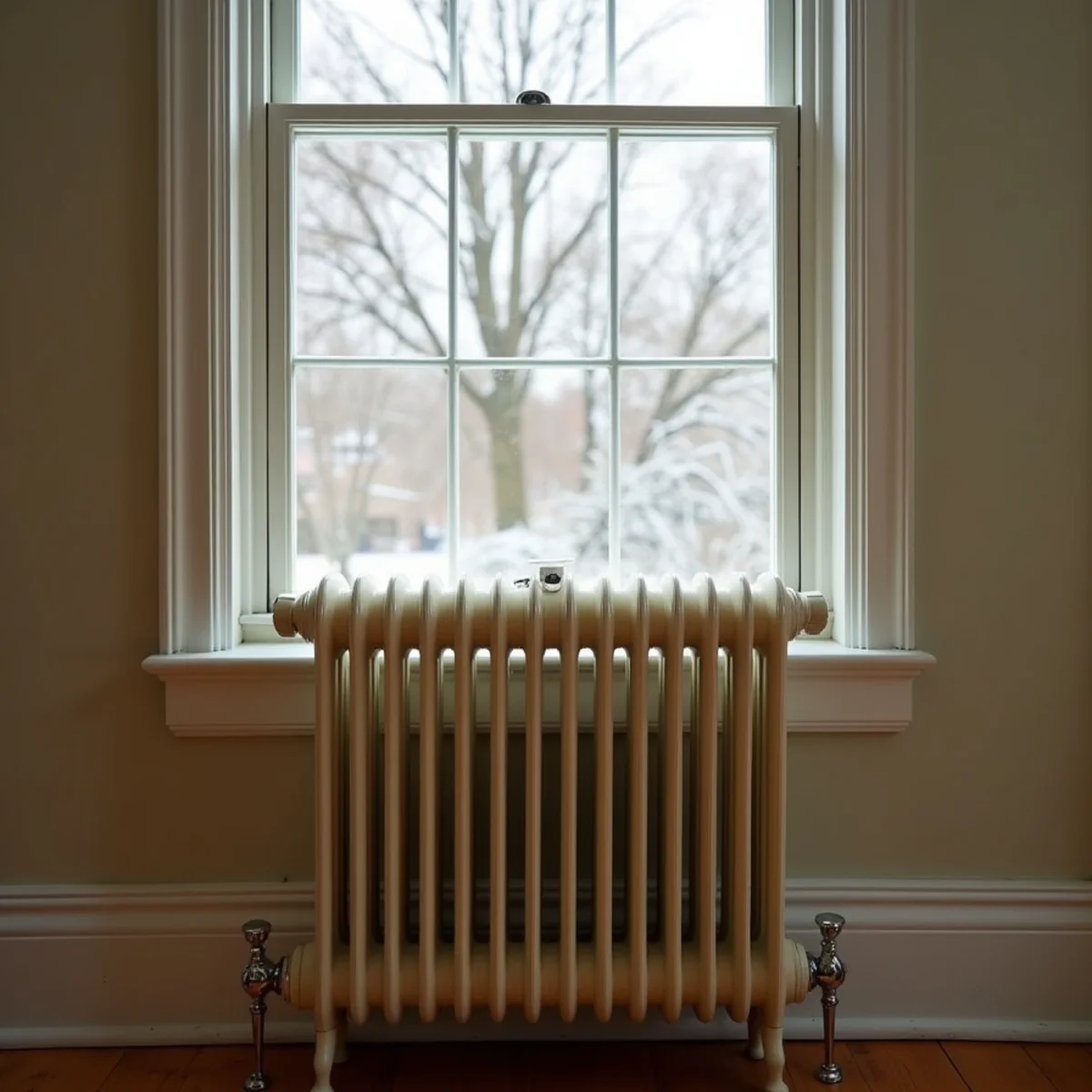
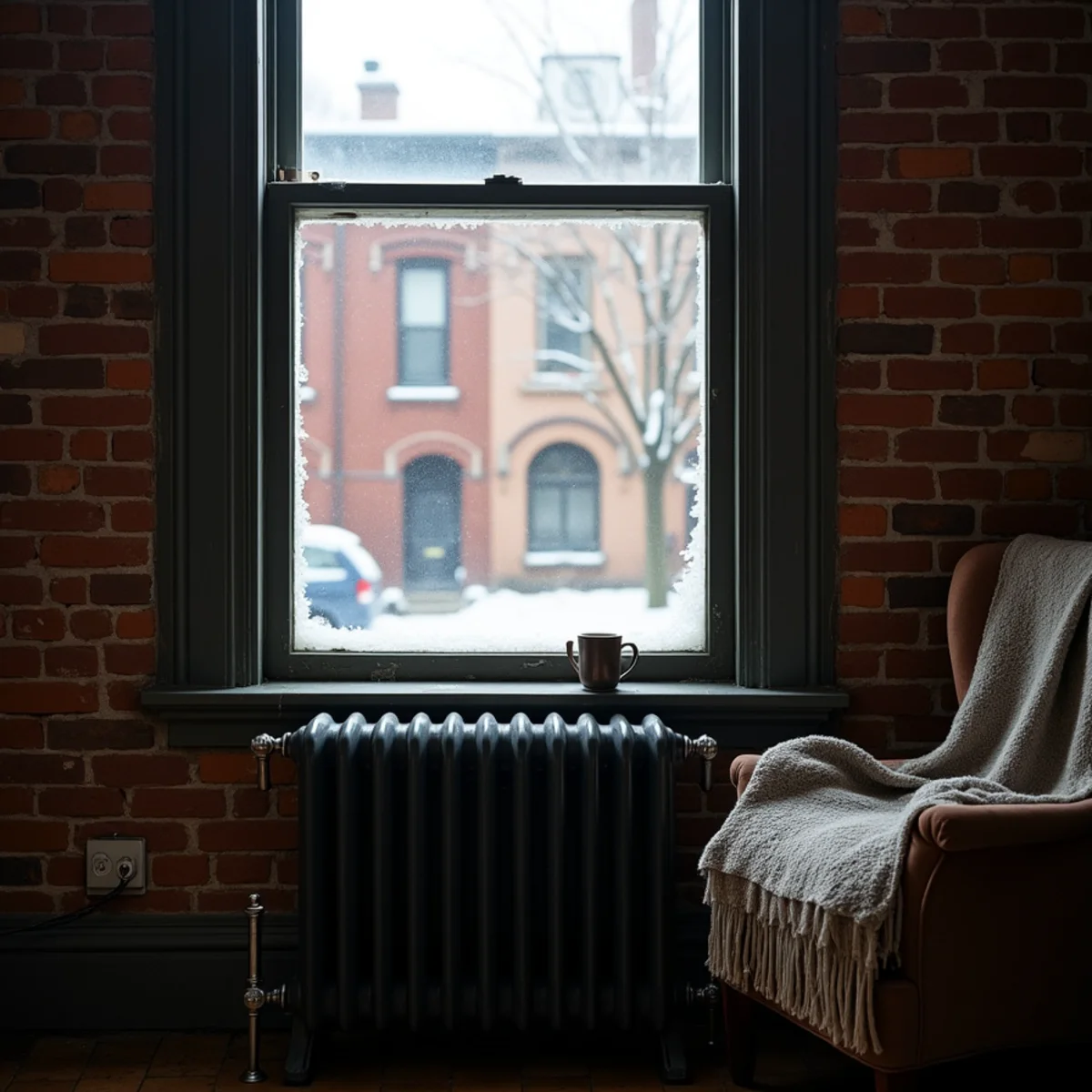
A steam boiler has a glass sight tube on the side showing the water level. It should be about half full while the boiler is idle. If the glass is empty, the low-water cut-off has probably shut the burner off to protect the boiler. Turn the boiler off at its switch and let it cool. Do not feed cold water into a hot, dry boiler; the shock can crack cast iron. Call for service. Our guide to steam radiator problems explains banging and cold radiators.
Hot water boilers
A hot water (hydronic) boiler has a combined pressure and temperature gauge. Cold, most residential systems sit around 12 to 15 psi. If the needle reads near zero, the system has lost water or the fill valve has failed. If it is pushing toward 30 psi, the relief valve may start to drip or discharge. Either way, call.
If you have a gas furnace: filter, door and vent pipes
Houses in Meadow Hill, Colden Park and Gardnertown usually have a forced-air furnace on Central Hudson gas. Try these:
- Filter. A clogged filter makes the furnace overheat and shut down on its limit switch. Replace it if you cannot see light through it.
- Front door. The blower door has a safety switch. Push the panel fully into place after a filter change; never tape the switch down.
- Vent pipes outside. High-efficiency furnaces vent through white plastic pipes in an outside wall. Drifting snow can block them. Clear the snow by hand.
- Status light. Count the blinks in the small window on the lower door and photograph the code chart.
- Condensate line. A high-efficiency furnace drains water through a small plastic line, often to a floor drain or out a wall. If that line freezes outside on a bitter night, the furnace shuts itself off. Do not pour hot water into the furnace; call and mention the frozen line.
- Standing pilot. Older furnaces and boilers may have a small pilot flame instead of an igniter. If it is out, follow only the lighting instructions printed on the unit. If you smell gas, or it will not stay lit after one try, stop and call.
If your gas stove will not light either, the problem may be supply, and Central Hudson is the first call. The repairs behind most furnace lockouts are covered on our furnace repair page.
If you have a heat pump: ice, defrost and backup heat
Heat pumps are common in Fishkill condos and newer additions, and they fail differently from a furnace:
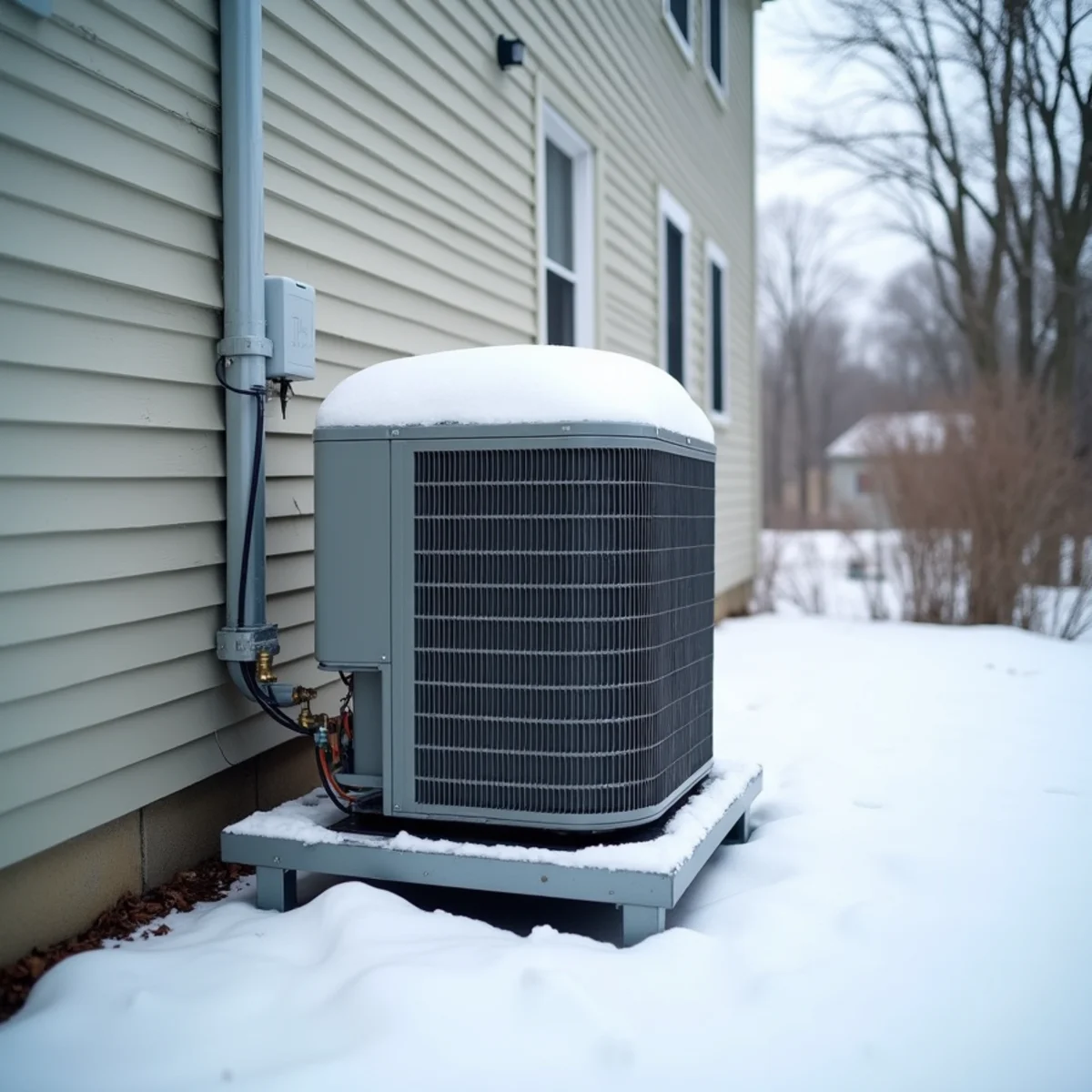
- Some frost is normal. In cold, damp weather the outdoor unit frosts over, then runs a defrost cycle with steam rising off it for a few minutes. That is the system working.
- A solid block of ice is not. If the coil stays encased in ice, or ice builds up from water dripping off the roof, the unit cannot pull heat from outside. Clear snow from around the base and turn the system off if ice keeps building; do not chip at the coil.
- Emergency heat. Many thermostats have an emergency or auxiliary heat setting that runs the backup heat strips. It can keep the house warm until a technician arrives, but it costs much more to run.
- Indoor unit. Check the air handler's filter and its breaker, which is often separate from the outdoor unit's.
If the outdoor fan or compressor never starts, or the air from the vents stays cool on emergency heat, call. Our 24/7 emergency HVAC repair page explains what happens next.
Before you call: what to leave alone and what to write down
Once the safe checks are done, stop and take notes.
What not to do
- Do not keep resetting. One press of an oil burner reset and one breaker reset is the limit. Do not cycle a furnace or boiler on and off at its switch either; write down what happened instead.
- Do not open the combustion chamber or burner compartment, and do not loosen or disconnect any gas piping.
- Do not touch refrigerant lines on a heat pump or ductless system, and do not chip ice off the outdoor unit.
Write it down
- Photograph the model and serial label. Do not remove panels to find it.
- Photograph the thermostat screen and any error or blink code.
- On a boiler, photograph the pressure gauge or the sight glass.
- Write down when the heat stopped, what happened just before (a noise, a smell, a power flicker, an oil delivery) and what you already checked.
- Note the fuel (oil, gas, propane or electric) and how heat reaches the rooms: radiators, baseboard or ducts.
Photos help the technician bring the right parts. They do not replace an on-site safety check.
From the field: what a typical no-heat call turns out to be
A typical call on the first hard freeze: a tenant in an East End two-family reports a boiler that clicks but will not fire, and the landlord lives in another town. The switch is on and the tank is a quarter full. The technician finds a clogged oil filter and nozzle, and replaces them once the owner approves the written price.
Patterns we see repeatedly around Newburgh:
- Empty oil tanks in January, when 18°F nights burn through a delivery faster than expected.
- Low water on steam boilers where nobody checks the sight glass.
- Reset pressed many times, turning a simple repair into a flooded chamber.
- Snow-blocked vent pipes on newer furnaces after a nor'easter.
- Rentals without the owner's number. The owner or manager usually approves the work.
When you call, tell us the fuel, the system type and the result of each check above, so the technician can bring the likely parts.
Still no heat? Keep the house safe and call us
If the thermostat, power and fuel all check out and the heat is still off, call Newburgh Bay Air Pros at (321) 478-0693. We answer 24 hours a day, including nights and holidays, and send the nearest available technician for emergency heating repair. You get an arrival window when you call, and you approve a written price before any work starts. Every HVAC technician we send is licensed where New York requires it, and insured.
We cover the City and Town of Newburgh, heating calls in New Windsor and the towns around them. To see what drives the bill, read our guide to heating repair costs in Newburgh.
While you wait, close doors to unused rooms and open sink cabinets on outside walls. Use space heaters only as the maker directs, and never heat the house with a gas oven or grill.
To protect the house until the technician arrives:
- If a boiler or pipe is leaking, move rugs and stored belongings out of the water's path, and keep children and pets away from the wet area and the equipment.
- Note the pipes most at risk: kitchen and bathroom lines on outside walls and any piping in an unheated basement, crawl space or porch. Point them out to the technician.
Common Questions
How many times can I press the reset button on my oil burner?
Once. If the burner lights and stays running, fine. If it fails again, stop and call. Each press pumps oil into the combustion chamber, and several presses in a row can flood it with unburned oil. Clearing a flooded chamber turns a simple filter or nozzle repair into a longer visit.
I rent an apartment in Newburgh and have no heat. Who should I call?
Call your landlord or property manager first, and follow up in writing with the date and time. The owner is generally responsible for heating repairs and is the person who approves the price, so a technician usually cannot start work without them. Landlords and managers can call us directly at any hour, and we send a technician to the building.
Is no heat at night an emergency, or can it wait until morning?
In a Newburgh January, with lows near 18°F, an older house can drop into the 40s overnight and pipes on outside walls can freeze. Treat it as urgent if the indoor temperature keeps falling, if anyone at home is very young, elderly or ill, or if the weather is turning colder. In those conditions, call rather than wait.
Why do some radiators heat and others stay cold?
On a steam system, a cold radiator usually means a stuck air vent, a partly closed valve or water trapped in a pipe. On a hot water system, it often means air in that radiator or loop, or a zone valve or circulator that has stopped. If only part of the house is cold, the boiler itself is probably running.
Does the technician start repairing as soon as they arrive?
No. The first step is a diagnosis. The technician checks the system, finds what failed and explains it. That visit is not an approval to repair: you get a written price, and nothing is replaced until you, or the owner in a rental, approve it. If the system is old or the repair is large, ask to see the repair and replacement options side by side.