The short answer
On a steam system, banging usually means water is sitting in pipes or radiators that should drain back to the boiler. Steady hissing from a radiator vent while it heats is normal, but spitting water is not. A radiator that stays cold usually has a stuck air vent, a closed valve or trapped water.
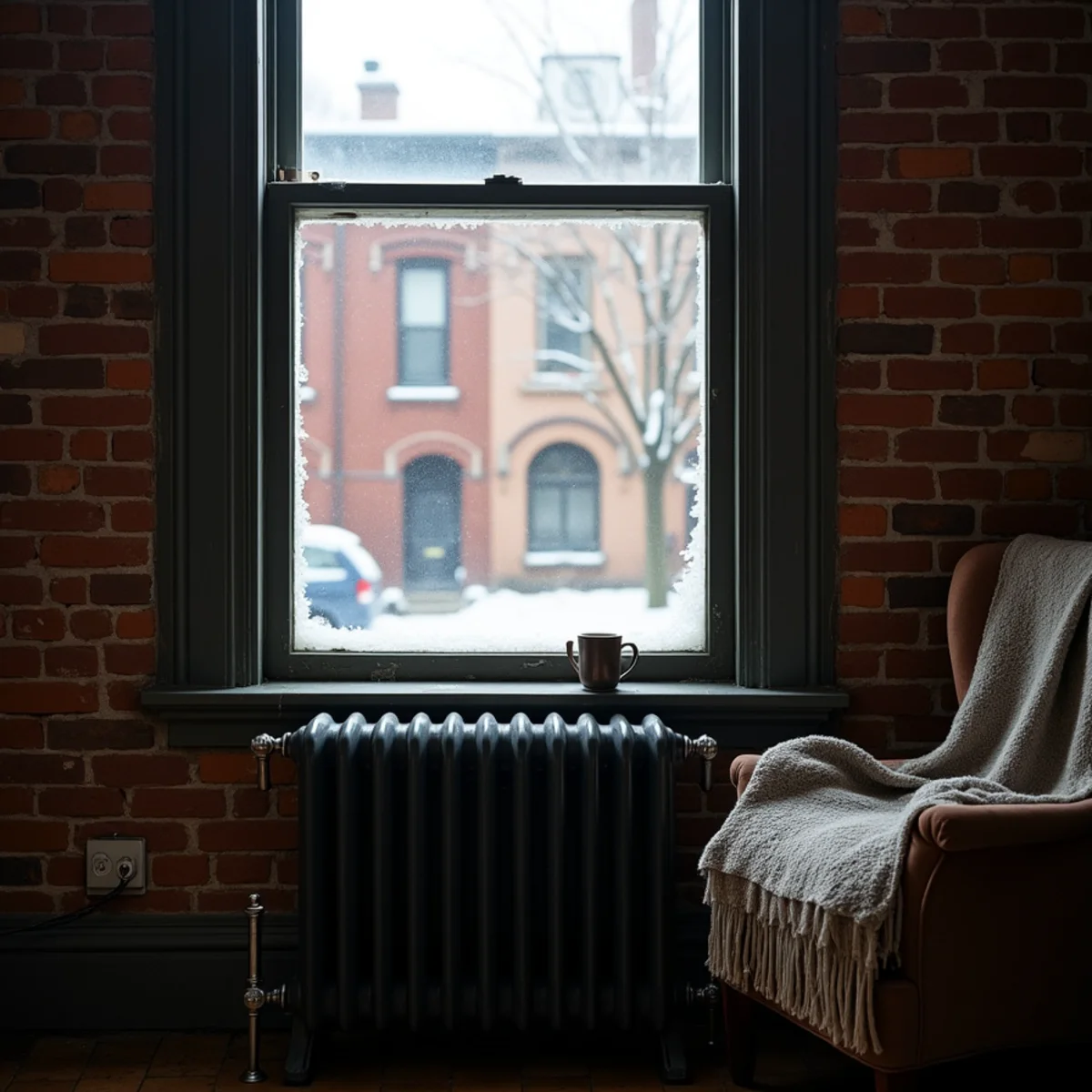
In a city whose median house was built in 1938, steam heat fills Newburgh's East End rowhouses and Beacon's Victorians. It is durable and noisy when something is off. The noise is useful, because each sound points to a different cause.
How a steam system is supposed to work
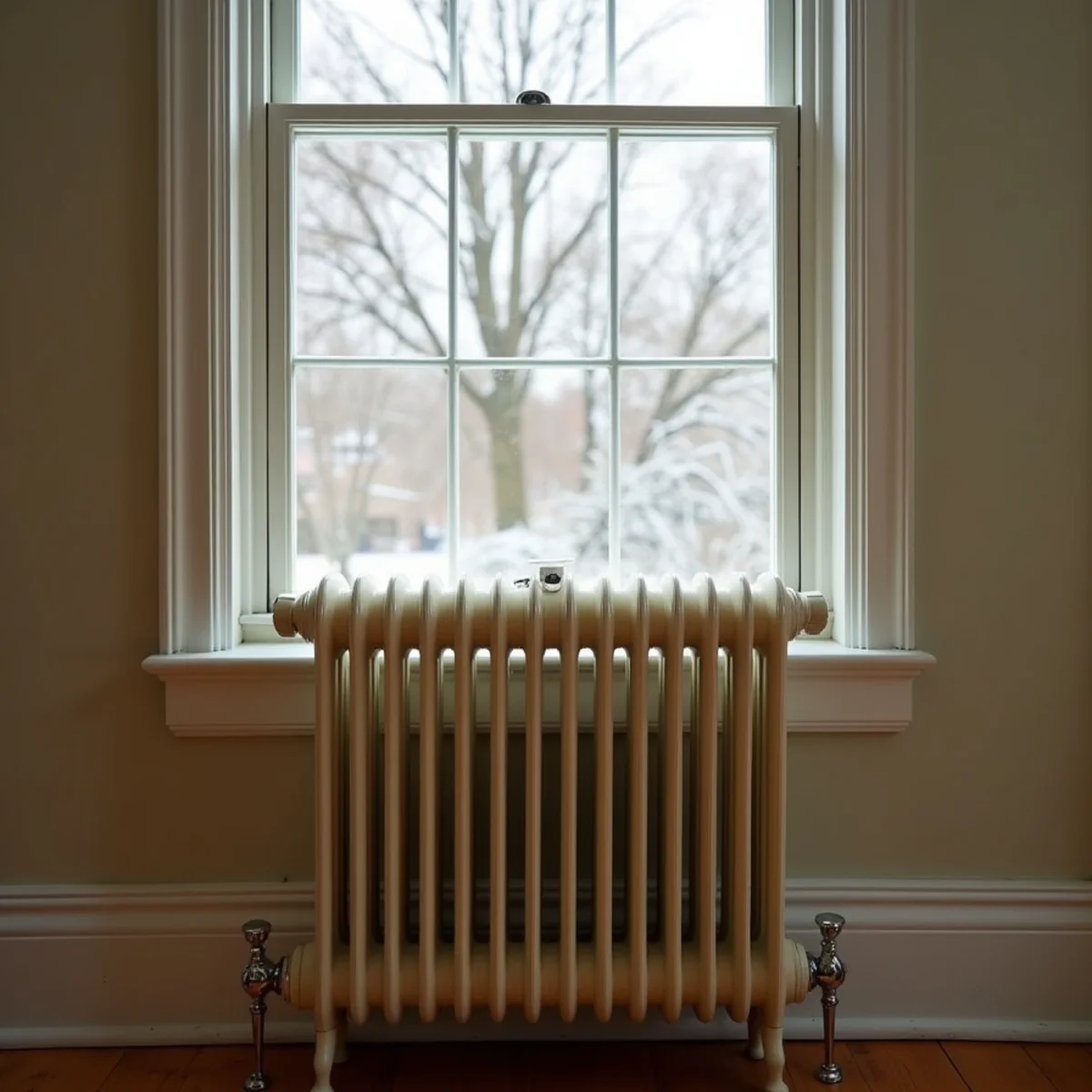
Most homes here have one-pipe steam. The boiler turns water into low-pressure steam, which rises through the mains and into each radiator through a single pipe. As steam comes in, the air vent on the side of the radiator lets the air out. When the vent gets hot, it closes. The steam gives up its heat, turns back to water and drains down the same pipe to the boiler.
Two-pipe steam, found in some larger houses and apartment buildings, has a supply pipe and a return pipe on each radiator, with a steam trap on the return instead of an air vent.
Three things make it all work: pipes and radiators pitched so water drains back, vents that let air out, and very low pressure. A residential steam boiler usually runs under 2 psi. Most steam problems come down to one of those three.
Banging and knocking: water where steam should be
Banging is called water hammer. Steam moving fast through a pipe hits a pool of water, drives it into an elbow, and the pipe rings. Common causes:
- A radiator pitched the wrong way. On one-pipe steam, the radiator should tilt slightly back toward its supply valve. Floors settle in a hundred-year-old house, and a level radiator can trap water. A shim under the far legs is often the fix.
- A valve partly closed. On one-pipe steam, the radiator valve must be fully open or fully closed. Half open, it traps water.
- Sagging pipes in the basement. A main that has lost its pitch holds water in the low spot.
- The boiler water level too high, or dirty water that foams and throws water up into the pipes.
- Pressure set too high. Higher pressure pushes steam faster and makes hammer worse.
A little ticking as pipes warm and expand is normal. A hard bang that repeats every cycle in the same place is not.
Hissing and spitting: the air vent at work or failing
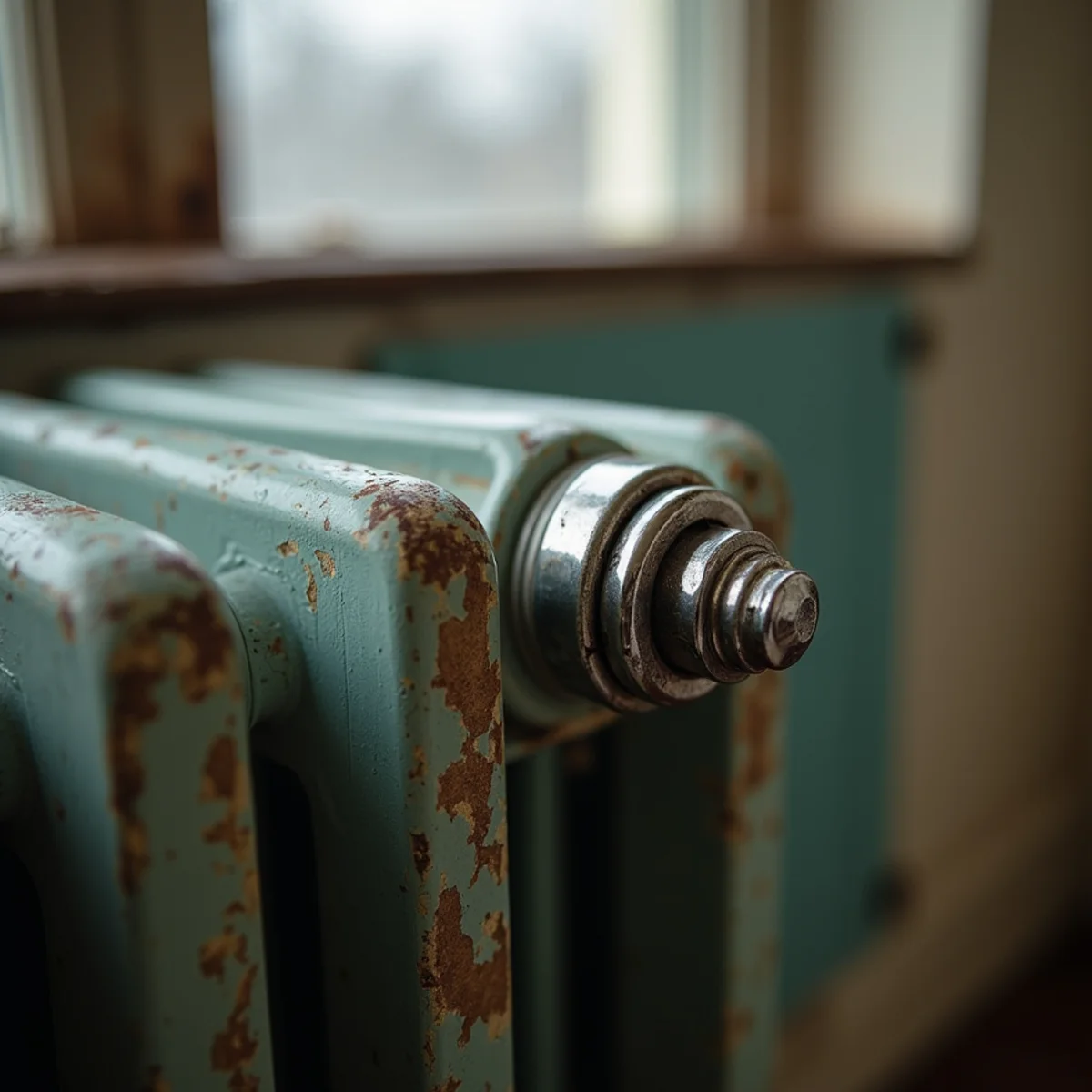
A soft hiss from the radiator vent while the system heats is the sound of air leaving. That is normal, and it should stop once the vent gets hot and closes.
Problems look like this:
- Vent hisses and then spits water or steam. The vent is worn, or water is reaching it because the radiator is pitched wrong or the boiler is throwing water.
- Vent never closes and keeps blowing steam. The vent has failed open.
- No hiss at all and the radiator stays cold. The vent may be stuck shut with paint or mineral deposits.
Replacing a radiator vent is one of the simpler steam repairs, but do it only with the system off and cool, and match the vent to the radiator's size and location. Main vents on the basement steam pipes matter just as much: if they are clogged, the whole system heats slowly and unevenly.
Cold radiators: air that cannot leave, or steam that cannot arrive
When one radiator stays cold while others heat, start with the simple checks:
- Make sure the valve at the bottom is fully open.
- Listen at the vent when the boiler fires. No hiss usually means a stuck vent.
- Look at the radiator's pitch. Water trapped inside can block steam.
If the cold radiators are the ones farthest from the boiler, the main vents in the basement are the usual suspect. If a whole floor is cold, the cause may be the boiler not making enough steam: low water, a short-cycling burner or a boiler that is too small for the radiators in the house. On two-pipe systems, a failed steam trap lets steam into the return and can leave radiators cold or banging.
Balancing the house with vent sizes
Radiator air vents come in different venting rates, and some are adjustable. A balanced system uses slower vents on radiators close to the boiler and faster ones on the far, upper-floor radiators, so steam reaches every room at about the same time. When a past owner swapped in whatever vent was handy, the near rooms overheat while the far ones lag. The fix starts with the main vents in the basement, then resizing radiator vents room by room.
Safety warning: Do not open a steam radiator to "bleed" it the way you would a hot water radiator. Steam radiators do not bleed, and loosening fittings can release scalding steam.
Closed-off rooms and freezing pipes
Wet return pipes along a cold crawl space or basement wall hold water all the time. A radiator shut off with water trapped inside can freeze in an unheated back room. Frozen water can crack a return or a cast-iron section. If you close rooms for the winter or an apartment sits vacant, tell the technician which ones so those runs get checked.
When the problem is the boiler, not the radiator
Look at the boiler's sight glass. With the boiler idle, the water should sit about halfway up the glass. If you are adding water more than about once a week, the system is losing water through a leak, a failing vent or a buried return pipe, and that is worth tracing before it damages the boiler.
Other boiler-side signs that call for steam boiler repair:
- The water in the sight glass bounces hard while the boiler runs (dirty water or surging).
- The burner shuts off on low water often, triggering the low-water cut-off.
- The pressure gauge reads well above 2 psi.
- Rust-colored water or a leak at the boiler base.
If the boiler has stopped completely and the house is cold, follow our no-heat checklist. Never feed cold water into a boiler that is hot and empty.
If the boiler keeps shutting off
A steam boiler that shuts off on low water is protecting itself. The low-water cut-off stops the burner before the boiler fires dry, so do not keep resetting it. Before you call, write down:
- The water level in the sight glass, or that you cannot see any.
- The reading on the pressure gauge.
- What happened just before it stopped: banging, a spitting vent, water added, a power outage.
Safety warning: If you smell gas or a carbon monoxide alarm sounds, leave the house. Call 911 or Central Hudson's gas emergency line from outside, then call us.
Steam radiator symptoms at a glance
Use this as a quick sorter before you call. Each line gives the usual cause, what you can safely check and what a technician does.
- Banging at startup. Cause: condensate trapped in a sagging pipe or a radiator tipped the wrong way. You: confirm the valve is fully open or fully closed, never halfway. Technician: re-pitches the run or shims the radiator, and checks the boiler water level.
- Hissing that never stops. Cause: an air vent stuck open. You: note which radiator. Technician: replaces the vent.
- Spitting water from the vent. Cause: water backing into the radiator, from poor pitch or a boiler running too high a water line. You: put a towel under it, do not touch the hot vent. Technician: corrects pitch, water level or pressure.
- One radiator cold. Cause: a closed valve or a stuck vent. You: open the valve fully, listen for a hiss at startup. Technician: clears or replaces the vent.
- Far radiators slow or cold. Cause: failed main vents or unbalanced radiator vents. You: tell us which floors lag. Technician: replaces main vents and resizes radiator vents.
- Whistling. Cause: a vent letting steam out fast, or pressure set too high. Technician: checks the vent and the pressuretrol, since residential steam belongs well under 2 psi.
Is banging dangerous? A clang on a cold morning is not an immediate hazard, but repeated water hammer strains pipe joints and fittings over time, and it usually means something is out of pitch or the water level is wrong. Get it looked at before a joint starts to leak.
From the field: steam in East End rowhouses and Beacon Victorians
Many steam systems around here were built for coal, converted to oil and then sometimes to gas, with a century of changes in between. A few patterns stand out.
Conversions to apartments. When a single-family house was split into two or three units, radiators were often moved, removed or added without re-pitching the pipes. That is a common source of banging that no vent will fix.
Replacement boilers sized by square footage. A steam boiler has to be sized to the total radiation in the house, not the floor area. Too small and the far radiators never heat; too big and it short-cycles and wastes fuel. After a new boiler goes in, the water also needs skimming to remove oil from the new piping, or it surges.
Painted and replaced vents. We often find vents painted shut or swapped for the wrong size, so the radiators near the boiler roast while the top floor stays cold.
A typical call: a Beacon homeowner with a banging living room radiator and a cold third floor. The fix is a shim under the radiator, two new main vents in the basement and the pressure turned back down to where it belongs.
When to call for steam heat service
Call when banging comes back every cycle, when water spits from vents, when you are adding water often or when part of the house stays cold. Call Newburgh Bay Air Pros at (321) 478-0693. We answer 24/7 and send the nearest available technician who works on steam. For a cold house at night, we treat it as emergency heating repair. You get an arrival window when you call, and you approve a written price before work starts. Paying for the diagnosis does not approve a repair; nothing goes ahead until you agree to that price. Every HVAC technician we send is licensed where New York requires it, and insured.
We serve the City and Town of Newburgh, New Windsor, Cornwall and the steam houses across the river in Beacon.
Common Questions
Is it normal for steam radiators to hiss?
A gentle hiss from the air vent while the radiator heats is normal. That is air being pushed out ahead of the steam, and it stops when the vent gets hot and closes. A vent that keeps hissing after the radiator is hot, or spits water or steam, is worn out or getting water from a pitch or boiler problem.
Can I turn off one steam radiator to keep a room cooler?
On a one-pipe system, the valve has to be fully open or fully closed. A half-open valve traps water and causes banging. A better option for comfort is a thermostatic radiator vent, which slows the vent when the room is warm. On two-pipe steam, the supply valve can be throttled, but ask a technician first.
Should I bleed my steam radiators like hot water radiators?
No. Steam radiators do not have bleed valves and should not be opened. Their air vents let air out automatically each time the system heats. Loosening fittings can release scalding steam. If a steam radiator stays cold, the cause is usually a stuck vent, a closed valve or trapped water. Hot water radiators are different and do have bleed keys.
How often should I add water to my steam boiler?
Many boilers have an automatic water feeder, but a manual one should not need water more than about once a week in the heating season. Needing more means the system is losing steam or water through vents, a leaking return pipe or the boiler itself. A technician can trace the leak and check the low-water cut-off.
When should a steam boiler be serviced?
In early fall, before the first sustained cold snap. A technician checks the sight glass and water condition, flushes or cleans and tests the low-water cut-off, checks the pressuretrol setting and the looped pipe beneath it, and looks at the main vents and burner. A problem found in September is easier to fix than a lockout on a January night.